Local pest service • McKinney, Texas
Pest Control McKinney, TX
Ants, rodents, termites, mosquitoes, cockroaches, spiders, bed bugs, and wasps all need different answers. We start with the signs, likely source, and property conditions, then match the problem to treatment, exclusion, inspection, or prevention.
How we approach the problem
Start With the Pest, the Source, and the Property
Whether you are comparing pest control services or searching for an exterminator in McKinney, useful service starts with more than a spray schedule. Entry points, nesting or breeding areas, moisture, food access, landscaping, and whether the issue is isolated or recurring all change the next step.
A strong McKinney pest control plan should make that reasoning clear, so you know when routine service is enough and when the problem may need exclusion, inspection, or a specialty treatment.
Residential pest control in McKinney
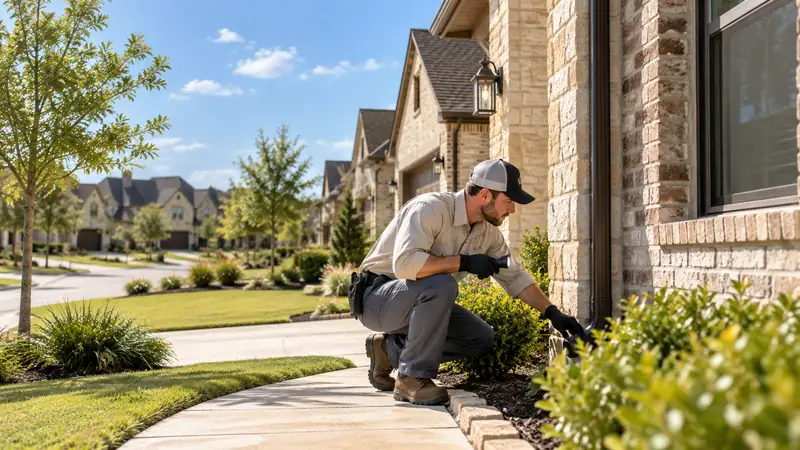
Interior, Exterior, Perimeter & Inspection Paths
The right service depends on where activity is occurring and what is supporting it. Choose the service path that matches the evidence and the affected part of your property.
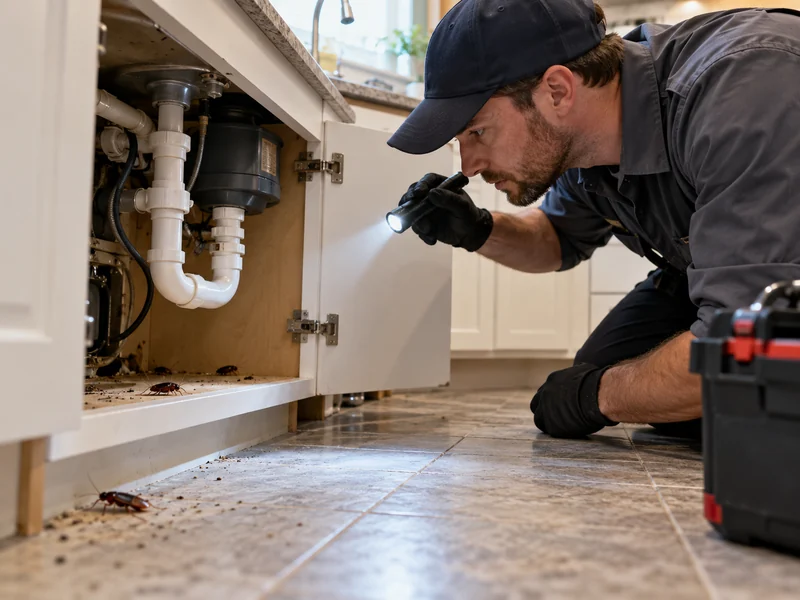 Interior Pest ControlTarget kitchens, bathrooms, sleeping areas, utility routes, baseboards, and indoor harborages according to the pest and evidence.Interior service options →
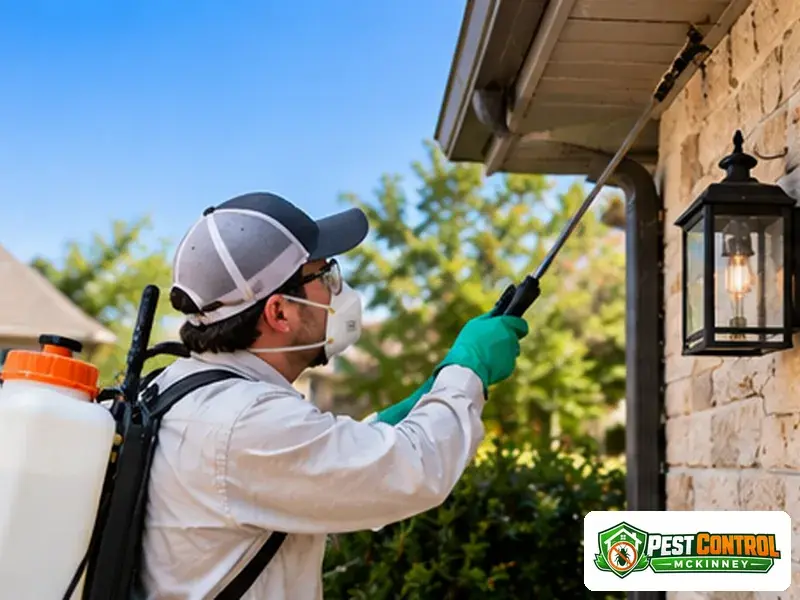 Exterior Pest ControlInspect exterior resting sites, eaves, garages, vegetation interfaces, doors, windows, and outdoor pressure points.Exterior service options →
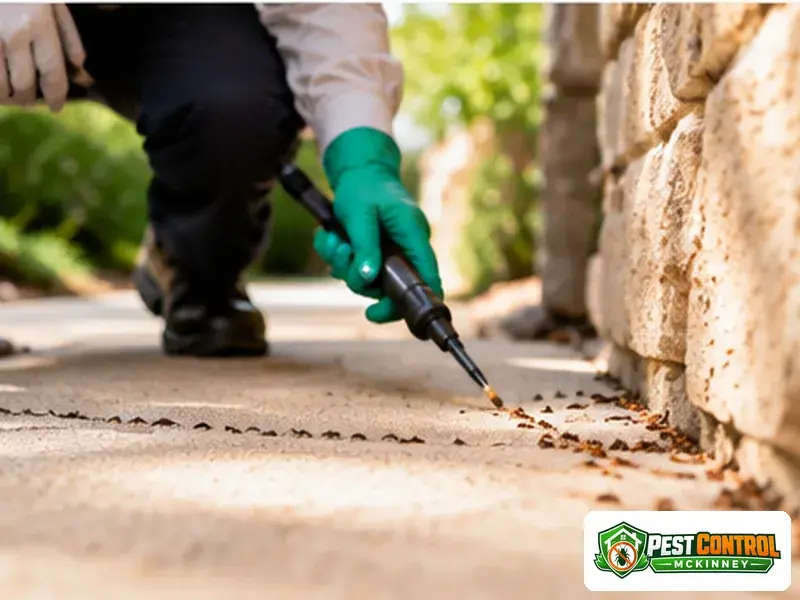 Perimeter & Entry PressureFocus on foundation edges, doors, windows, utility penetrations, and recurring routes between exterior habitat and the home.Prevention guide →Pest Inspection & IdentificationWhen signs overlap or the pest is uncertain, inspection should come before selecting treatment or a specialty service.Pest inspection →
Pest-control services
Common Pest Problems We Help McKinney Homeowners Address
Homeowners should be able to identify the right service quickly. Core pest control services in McKinney include ant control, rodent control, termite control, mosquito control, cockroach control, spider control, bed bug control, and wasp or hornet control, with each service connected to focused homeowner guidance.
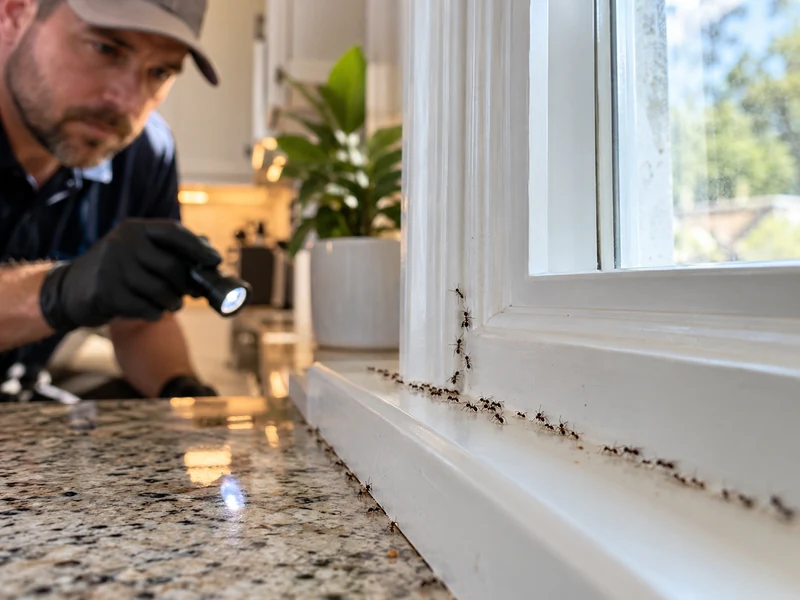
Ant Control
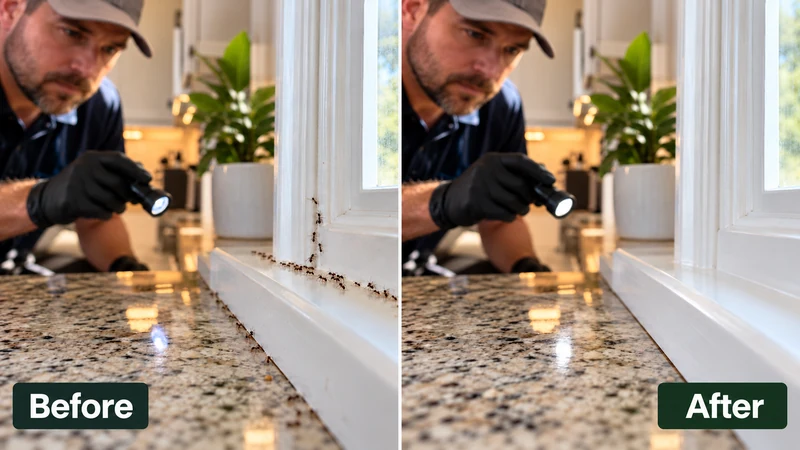
Recurring trails near kitchens, bathrooms, windows, patios, or foundations can continue when the colony, moisture, food source, or entry route is still active.
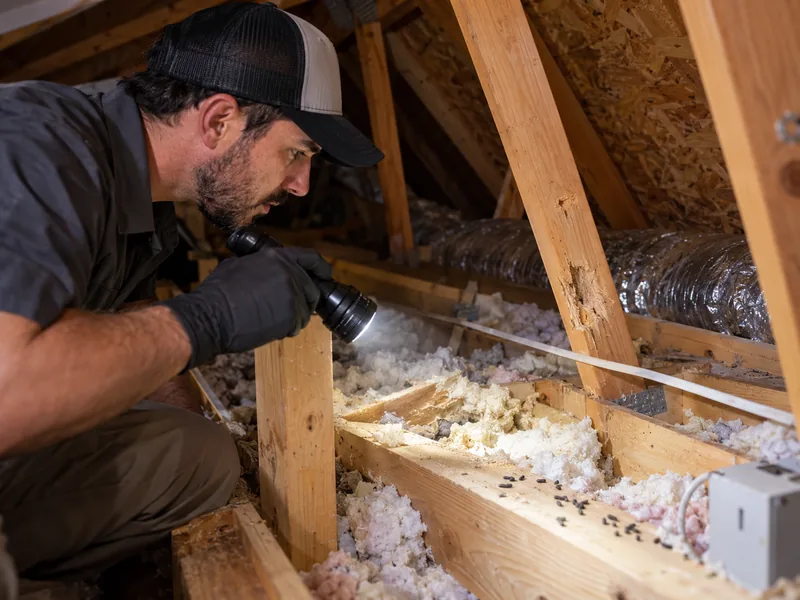
Rodent Control
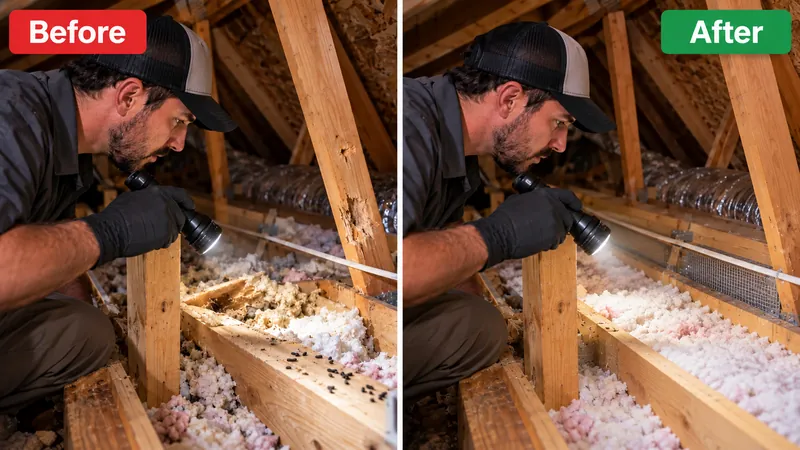
Scratching at night, droppings, gnawing, or disturbed insulation can point toward mice or rats. Removal and exclusion solve different parts of the problem.
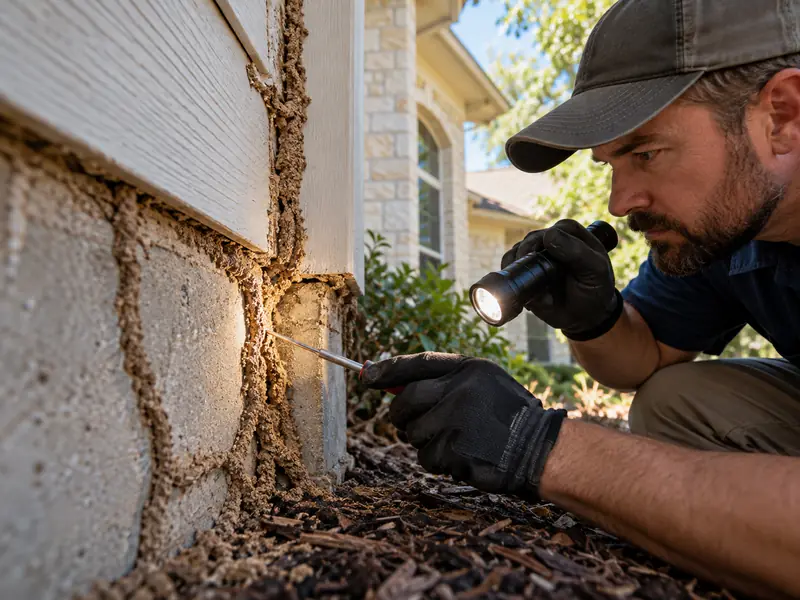
Termite Control
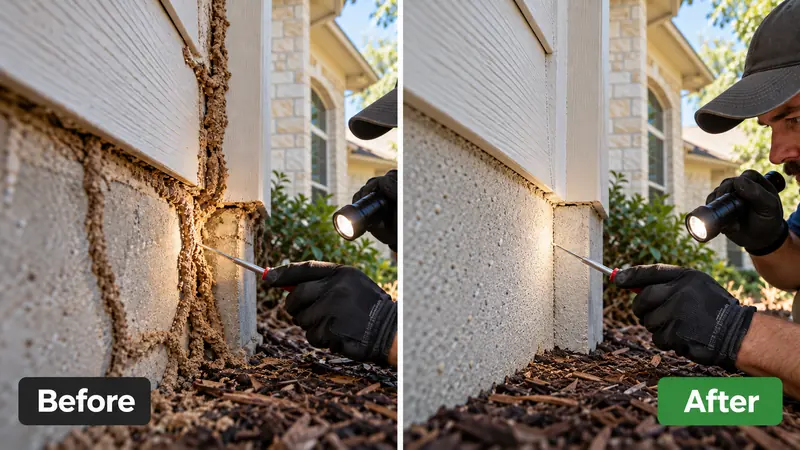
Swarmers, discarded wings, mud tubes, or suspicious wood conditions need careful identification before assuming the insects are simply flying ants.
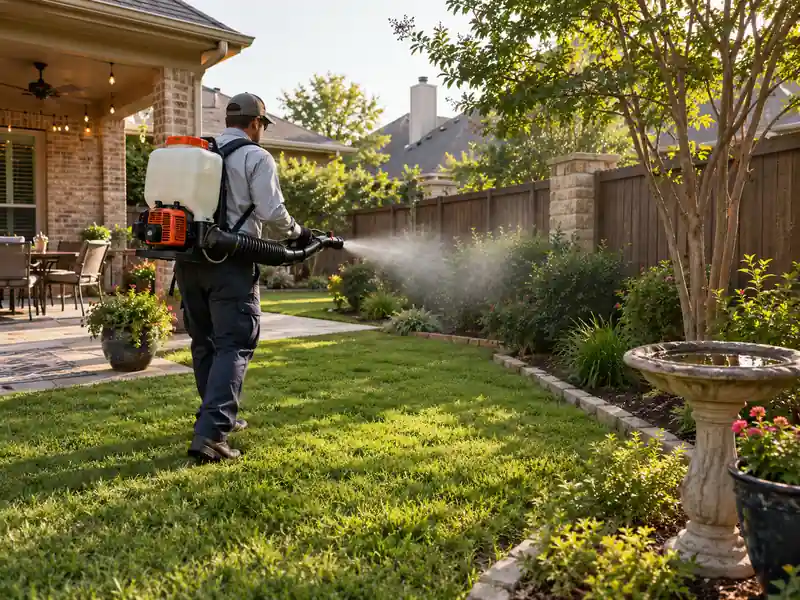
Mosquito Control
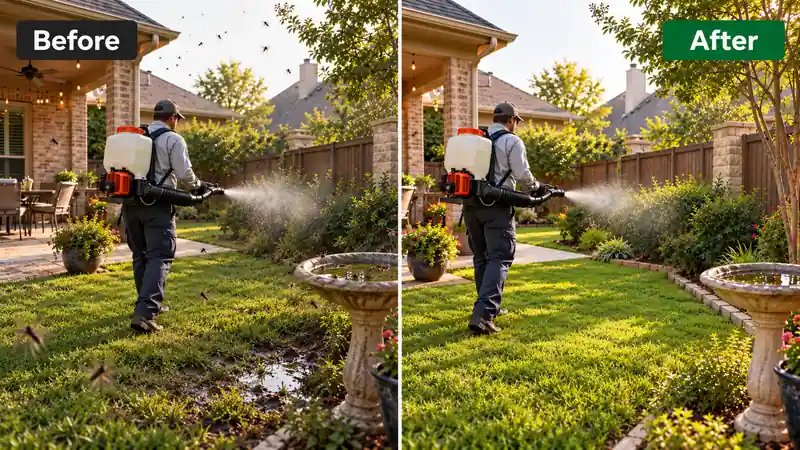
Standing water, drainage, shade, dense vegetation, and adult resting areas can all affect backyard mosquito pressure.
Cockroach Control
Species, moisture, appliances, cracks, wall voids, food access, and breeding areas change the treatment plan.
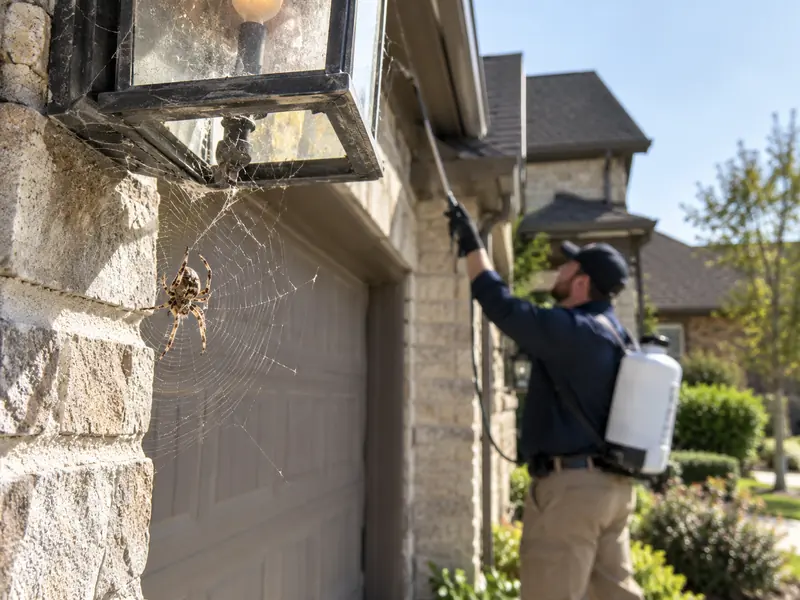
Spider Control
Webs around eaves, exterior lights, patios, and garages may reflect both spider harborage and the insects they are feeding on.
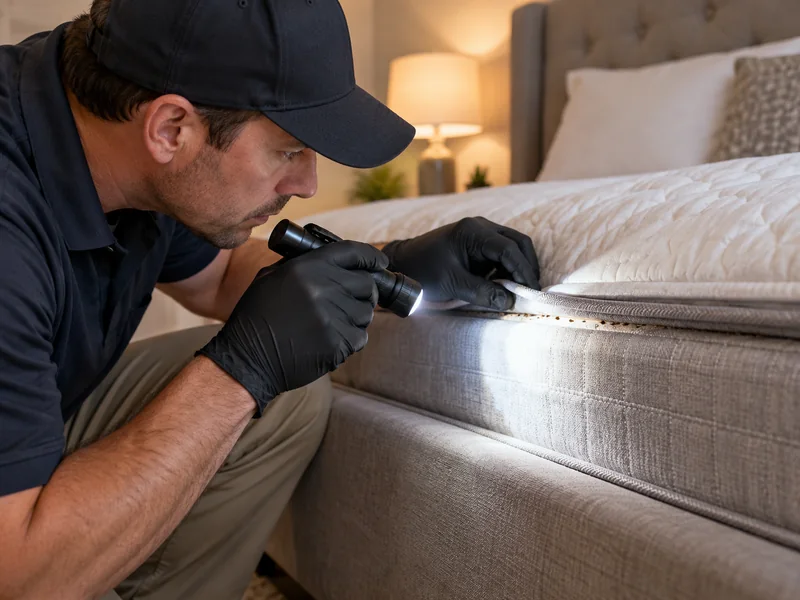
Bed Bug Control
Bites alone are not enough to confirm bed bugs. Mattress seams, spotting, shed material, frames, and live insects provide stronger evidence.
Wasp & Hornet Control
Repeated flight around eaves, rooflines, sheds, or wall openings can indicate a nearby nest and requires careful inspection.
Property-specific planning
Pest Control for Every Property Type
Construction, occupancy, shared walls, landscaping, garages, rooflines, pets, and access can change where inspection starts and what prevention is practical.
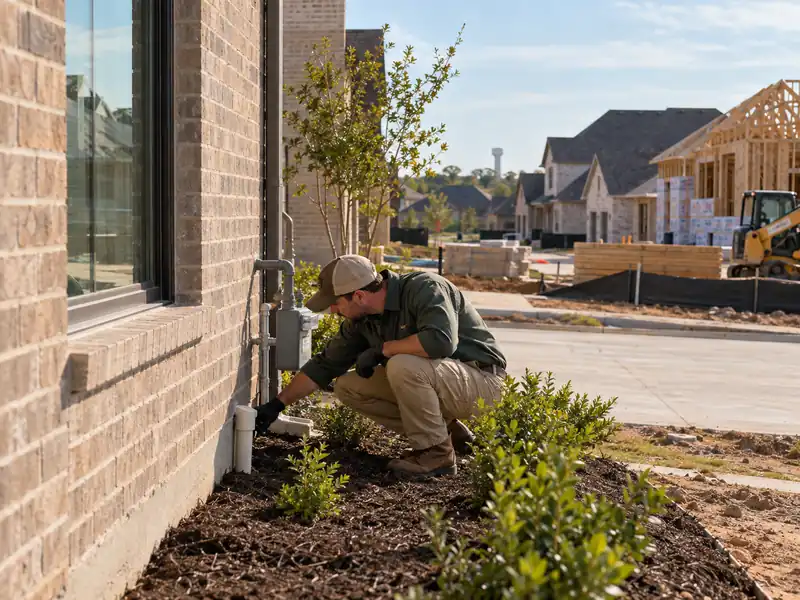 New ConstructionFresh grading, open penetrations, landscaping, and turnover conditions create different prevention priorities.New-construction service →Established HomesOlder seals, mature vegetation, attic access, repairs, and moisture can create recurring routes.Home inspection →
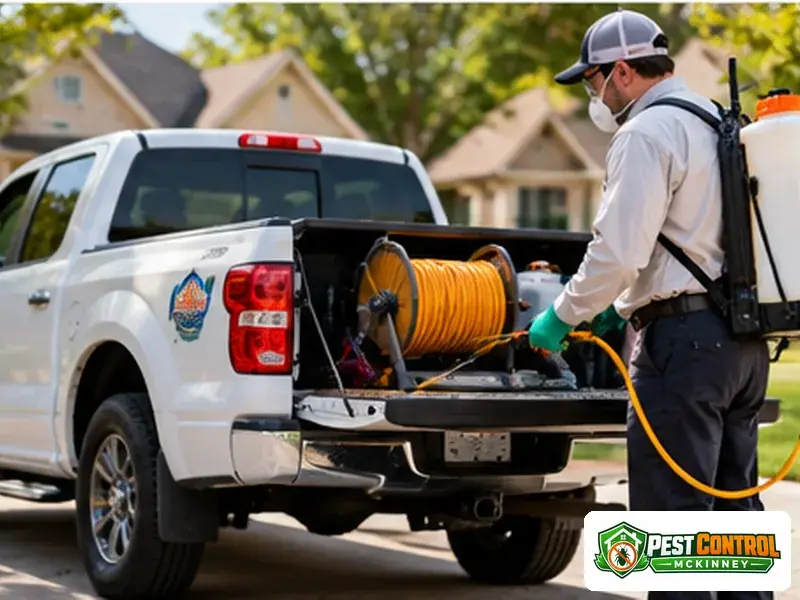 Townhomes & RentalsShared walls, connected rooflines, neighboring units, and access limits change diagnosis and prevention.Service directory →Families & PetsPreparation, product placement, aquariums, children, pets, and food-contact areas should be considered first.Treatment safety →
Entry, nesting & recurrence
The Visible Pest Is Often Only One Part of the Problem
Separate the visible pest from the conditions supporting it. These checks explain why activity can return after a quick treatment.
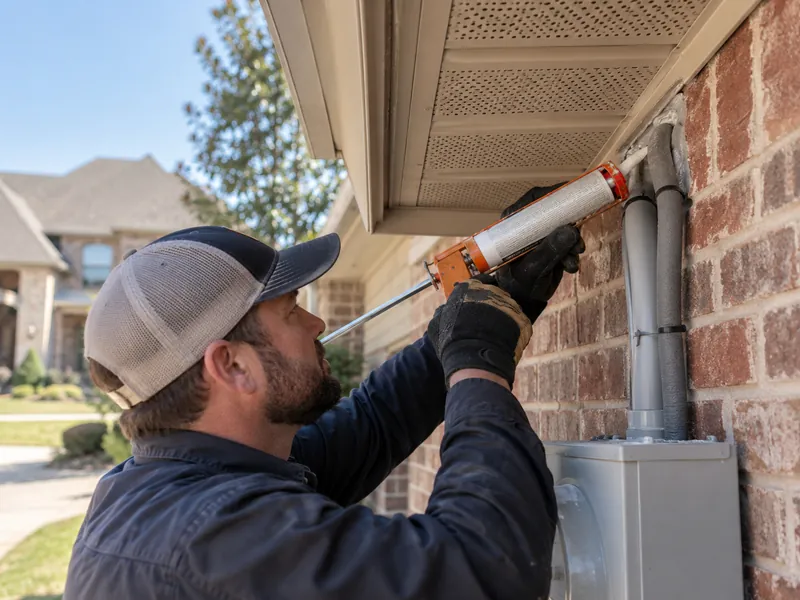 Entry RoutesDoors, vents, rooflines, utility penetrations, garage transitions, and other structural gaps can keep feeding recurring activity.Pest-proofing guide →Nesting & Breeding ConditionsStanding water, dense vegetation, clutter, cardboard, food, moisture, and protected voids can support breeding or harborage.Inspection path →Recurrence FactorsNeighboring pressure, untreated source areas, species biology, sanitation, moisture, and follow-up timing can explain repeat activity.Service options →
Pest-control services & homeowner guides
Helpful Paths Beyond the Main Service Grid
Use these focused paths when the question is narrower than a general pest-control request.
Rodent ExclusionStructural entry-point repair after active rodent pressure is understood.Rodent exclusion →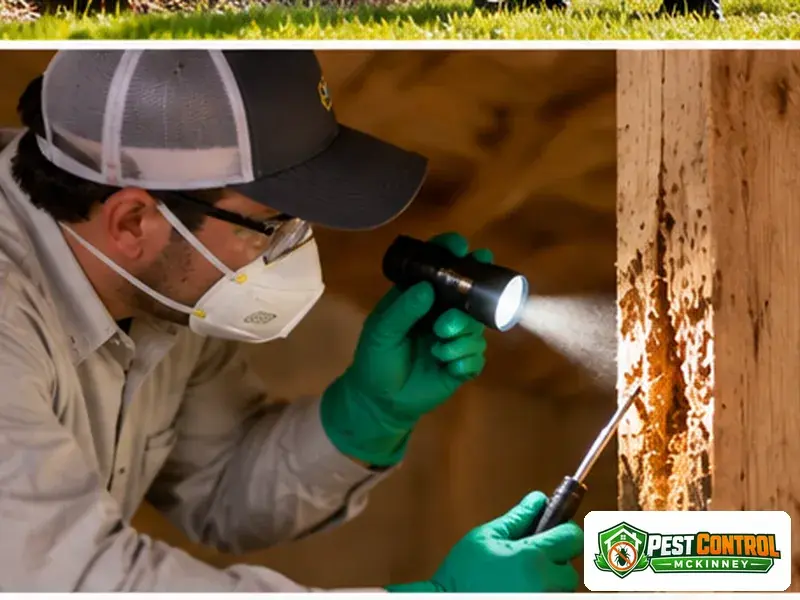 Termite vs Flying AntCompare swarmers and flying ants before choosing the wrong treatment path.Identification guide →Pest InspectionStart here when the pest, source, or service category is still uncertain.Inspection guide →Pest-Control CostUnderstand the variables that change scope, follow-up, and pricing.Cost guide →
Explore the McKinney pest-control blog for identification, seasonal and prevention guides, with links to the relevant service options.
McKinney pest-control service standards
Practical Pest Control Built Around the Property
The operating standard should be simple: identify first, treat the evidence, reduce the source, and explain what happens next.
Service evidence before promises
What Homeowners Should Be Able to Verify
A credible pest-control plan should explain the evidence, treatment scope, prevention work, and follow-up without relying on unverifiable review counts or generic guarantees.
Inspection FindingsKnow what evidence was found, where activity is concentrated, and which areas could not be inspected.Inspection guide →Treatment ScopeUnderstand what is being treated, why that method fits the pest, and what preparation or re-entry rules apply.Safety guide →Follow-Up & PreventionSeparate active treatment from exclusion, monitoring, source reduction, and any return visit that is actually needed.See the process →
PEST CONTROL REVIEWS
What Homeowners Share
Homeowners value a technician who explains the problem, treats the affected areas carefully and makes the next steps clear. Browse feedback covering ant, termite, rodent and other pest-control visits.
Read McKinney pest-control reviews →
Planning your visit? See how our pest-control service works.
Service location
McKinney, Texas
2321 Teddy Roosevelt DrMcKinney, TX 75070, United States
Open 24 hours · 7 days a week
Local service & location
Local McKinney Service, Confirmed by ZIP
Our location is 2321 Teddy Roosevelt Dr, McKinney, TX 75070. Call with your address and pest concern to confirm coverage and arrange service.
- McKinney ZIP codes 75069, 75070, 75071 and 75072
- Inspection, treatment and prevention for your property
- Open 24 hours a day, seven days a week
For nearby communities, check our service-area guide and confirm availability before scheduling. Share where you see activity, your property type, and any access or preparation needs.
Pricing & scope factors
What Changes Pest-Control Cost in McKinney?
Our process
A Clear Path From Pest Sign to Practical Next Step
A simple four-step process keeps the service logic clear from the first pest sign through treatment and recurrence reduction.
STEP 01
Tell us what you see
Share the pest if you know it, or describe the signs: trails, droppings, scratching, wings, bites, webs, nests, or where activity appears.
STEP 02
Inspect & identify
Look at the active area, likely harborages or entry routes, moisture, exterior conditions, and the evidence needed to narrow the pest down.
STEP 03
Treat the active problem
Choose the appropriate method for the pest and location instead of assuming every room or exterior area needs the same treatment.
STEP 04
Reduce repeat activity
When relevant, address accessible gaps, standing water, sanitation, landscape contact, storage, or other conditions that can support recurrence.
Reference documentation
Service Standards & Documentation
These sample reference documents illustrate the service standards and records a homeowner may want to review. They are not presented as operator licenses, certifications, insurance proof, or endorsements; ask the servicing company for its current credentials and coverage documentation.
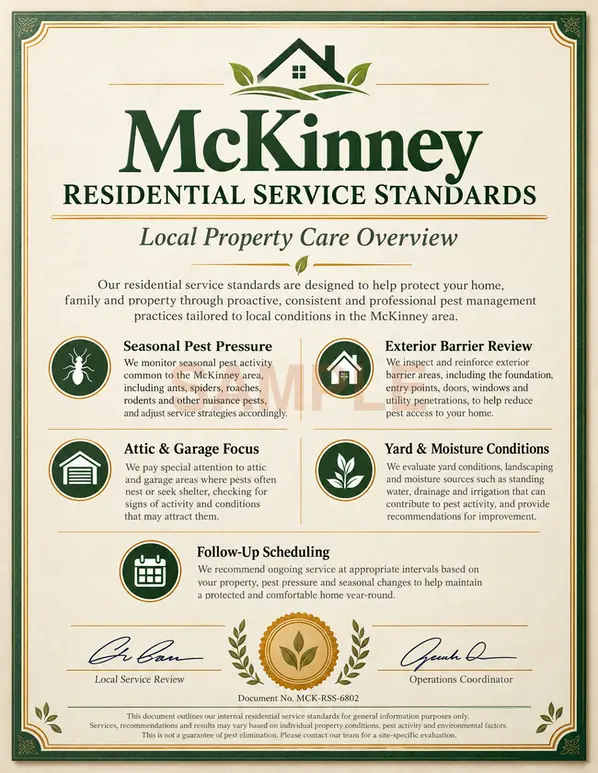 McKinney Residential Service Standards
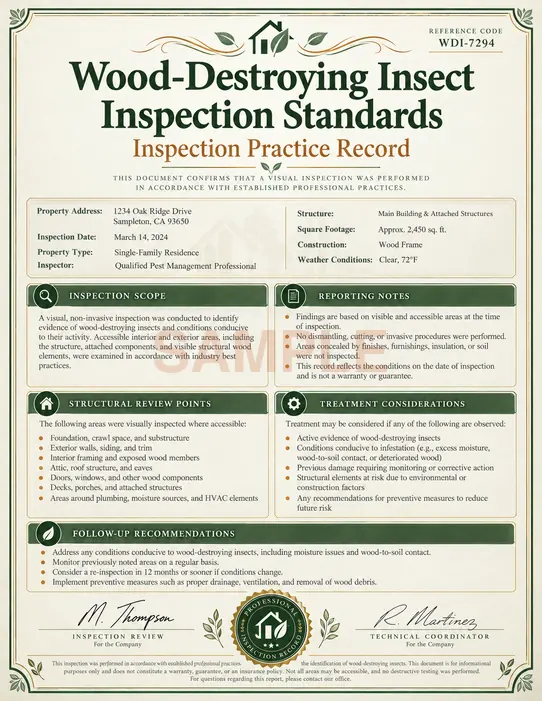 Wood-Destroying Insect Inspection
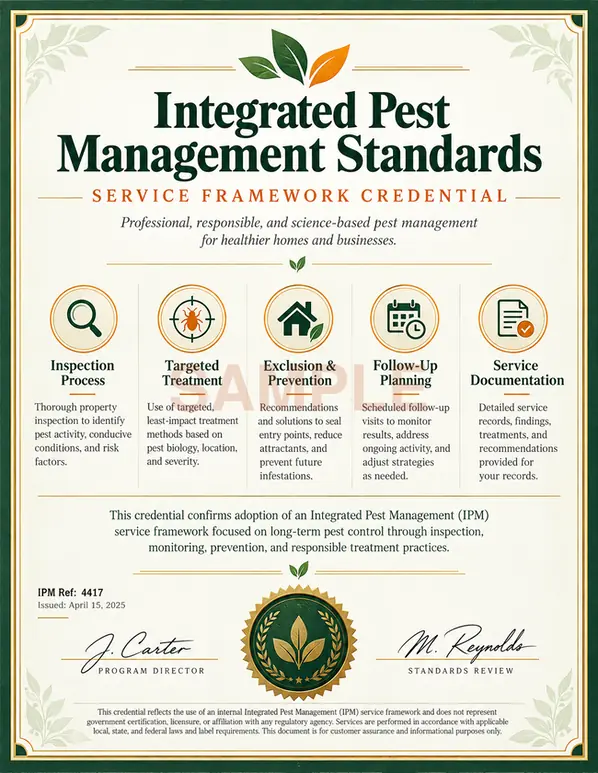 Integrated Pest Management
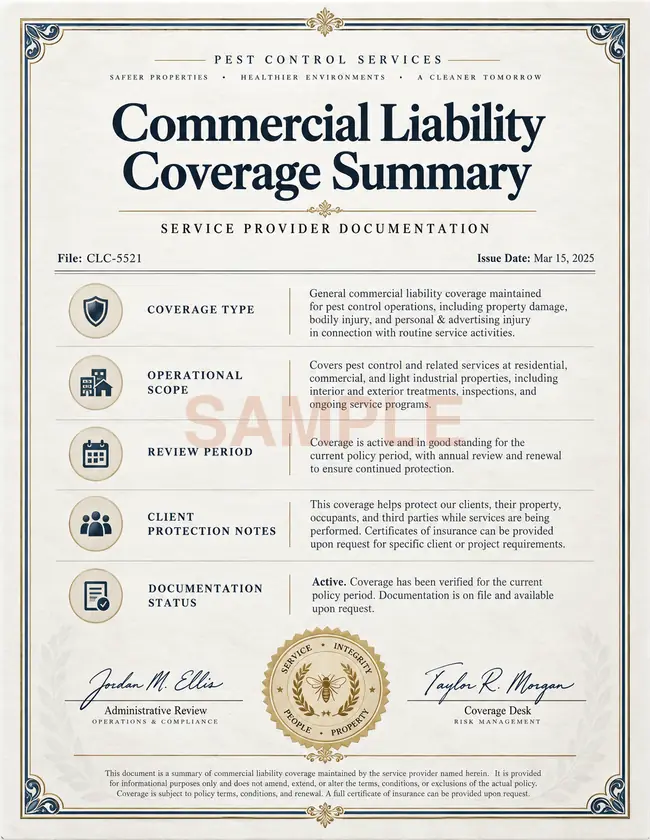 Commercial Liability Coverage
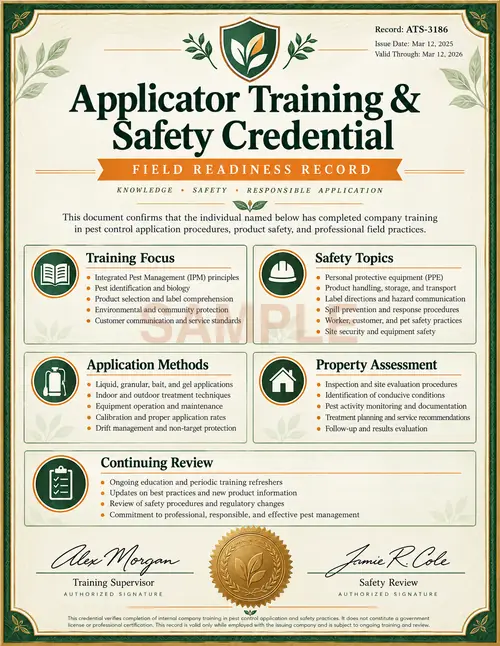 Applicator Training & Safety
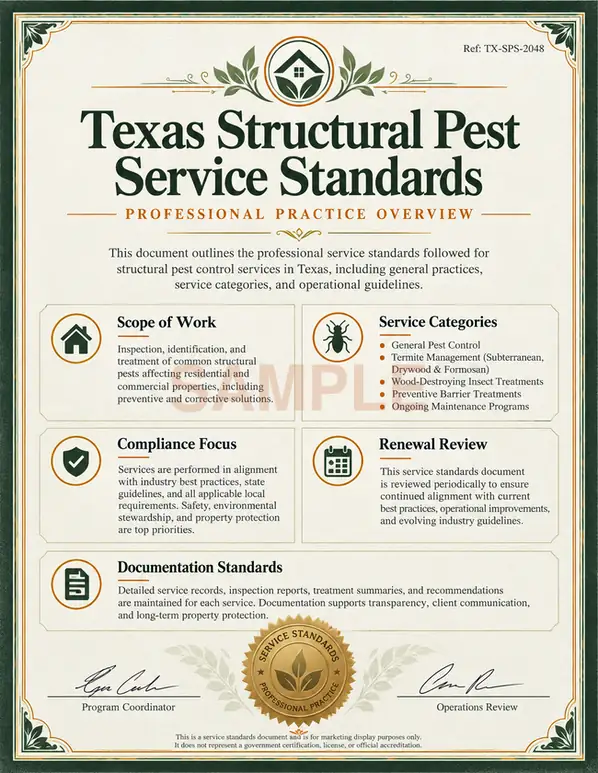 Texas Structural Pest Service Standards
Final quality check
Before We Consider Service Complete
The end of a visit should leave a clear record of what changed, what still needs monitoring, and what practical next step reduces recurrence.
Frequently asked questions
Pest Control McKinney FAQs
These answers cover practical questions homeowners often ask before choosing a service.
How often should pest control be done in McKinney?
There is no single schedule that fits every property. Frequency depends on the pest, severity, property conditions, treatment method, time of year, and whether the issue is isolated or recurring.
Why am I still seeing pests after treatment?
Some control methods work over time. Hidden nests, eggs, new arrivals, untreated entry routes, moisture, or a treatment cycle that requires follow-up can also contribute to sightings.
Why do ants keep returning after I spray them?
Surface spray can kill visible workers without eliminating the colony. Species, bait acceptance, moisture, food access, nesting location, and entry routes can all influence recurrence.
What is scratching in my attic at night?
Mice and rats are common possibilities, but noise alone is not enough for a firm identification. Droppings, rub marks, gnawing, nesting material, and entry openings help narrow the cause.
Do you always need to treat the inside of the house?
No. Some problems can be managed primarily from the exterior or at specific activity zones. Active indoor infestations may require targeted interior work.
Is pest control safe around children and pets?
Safety depends on the product, formulation, application site, label directions, and household circumstances. Preparation, drying, or re-entry instructions should be explained when they apply.
Request service
Need Local Pest Control You Can Understand Before You Commit?
Tell us what you are seeing, where it is happening, and your ZIP code. If you do not know the pest, describe the signs instead. That helps separate a routine household pest issue from a problem that may need inspection, exclusion, or specialty treatment.