MOUSE & RAT CONTROL
Rodent Control McKinney, TX
Scratching in the attic, droppings, gnawing, odor, or repeated sightings point to more than a trapping problem. Effective rodent work combines removal with inspection of entry routes and conditions that keep activity returning.
MOUSE & RAT CONTROL
Removal Is Only One Part of Rodent Control
A trap can remove an individual animal, but it does not explain how rodents entered, whether more activity remains, or which gaps should be addressed. Local rodent removal in McKinney should separate three jobs clearly: confirming activity, controlling the current population, and reducing practical re-entry routes.
Rooflines, garage transitions, utility openings, vents, attic edges, stored materials, vegetation contact, and exterior food or water sources can all matter. The goal is not to seal randomly; it is to identify likely access based on evidence and property construction.
COMMON SIGNS & PRIORITIES
What to Check Before Choosing a Treatment
Attic activity
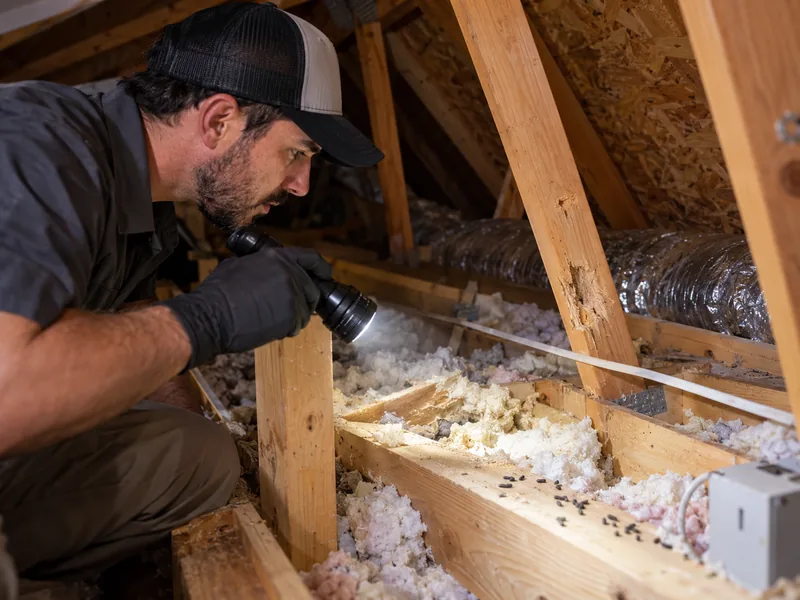
Inspect droppings, nesting material, rub marks, gnawing, insulation disturbance, noise locations, and accessible roof or soffit transitions.
Garage & utility entry
Review door gaps, penetrations, pipe and cable routes, storage, and wall transitions that can provide shelter or movement.
Exterior pressure
Check vegetation, fences, roof access, pet food, bird seed, waste storage, and openings that connect the exterior to sheltered spaces.
RODENT EVIDENCE & MONITORING
Build the Rodent Plan Around Fresh Evidence
Noise alone does not identify the animal. Fresh droppings, gnawing, rub marks, tracks, nesting material, food damage, and monitoring results help distinguish active mice or rats from old evidence or another attic visitor.
Where?
Attic, garage, kitchen, pantry, utility room, exterior wall, or roofline.
When?
Nighttime noise, daytime sightings, new droppings, or recurring evidence after cleanup.
What changed?
Food access, stored materials, weather, construction, landscaping, or a new opening.
INSPECTION FIRST
What a McKinney Rodent Inspection Should Check First
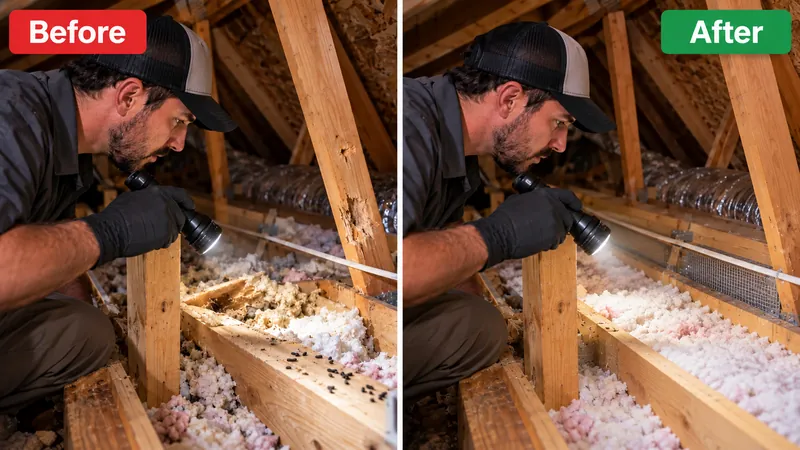
Inspection should distinguish active evidence from old evidence. Fresh droppings, current noises, new gnawing, disturbed bait, tracks, and repeated camera observations carry more weight than a single historical sign. Entry-point work should follow that evidence. Closing the wrong opening while activity remains inside can create a different problem, so sequencing matters.
Useful information before the visit
Note where activity appears, when it is most noticeable, how long it has been present, any recent DIY products used, moisture or construction changes, and the McKinney ZIP. Clear observations help narrow the inspection without assuming the diagnosis.
HOW THE SERVICE DECISION WORKS
A Practical Four-Step Approach
1
Confirm
Identify likely mouse or rat activity and document where signs are concentrated.
2
Control
Use an appropriate trapping or control plan based on the setting, access, occupants, and label or device requirements.
3
Exclude
Address practical openings after the active situation and likely travel routes are understood.
4
Monitor
Recheck activity, devices, new signs, and repaired areas; adjust the plan if evidence points elsewhere.
LOCAL PROPERTY CONTEXT
Rodent Removal, Exclusion, and McKinney Homes
Different McKinney properties create different inspection priorities. A newer home may still have utility, garage, roofline, or construction-transition gaps. An established home may have repairs, vegetation contact, older seals, or storage conditions that change access. When the main concern is entry-point work after control, the dedicated rodent exclusion page will cover that narrower intent without duplicating this removal-focused page.
Primary McKinney ZIPs include 75069, 75070, 75071, and 75072. Service availability and the final scope should still be confirmed for the specific address rather than inferred from a ZIP alone.
MICE, RATS, ATTICS & ACTIVE REMOVAL
Active Rodent Control and Structural Exclusion Are Different Jobs
This page owns the active-population problem: signs, identification, monitoring, trapping or device placement, and follow-up. Structural sealing belongs on the separate Rodent Exclusion page.
Mouse Activity
Small droppings, pantry or appliance activity, light scratching, gnawing, and lower-level travel routes often point toward a mouse-focused inspection.
Roof-Rat & Attic Activity
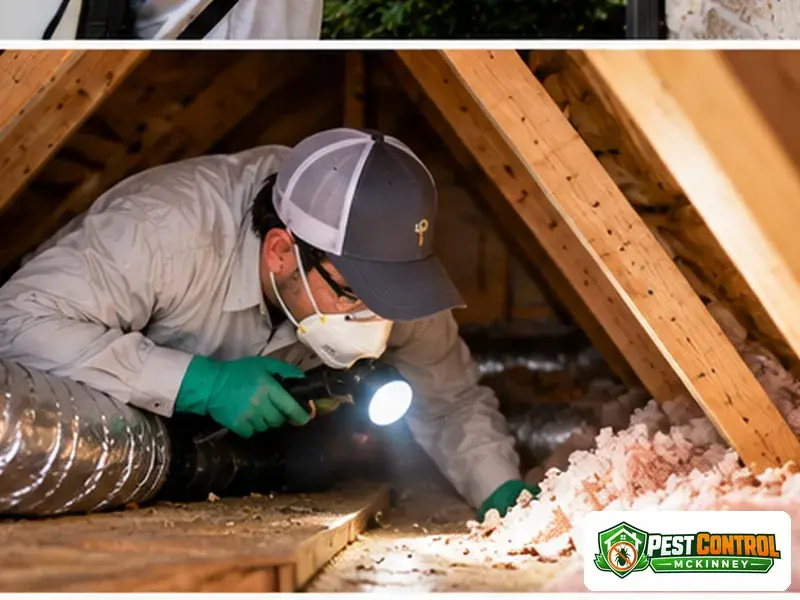
Elevated travel, attic evidence, soffits, vents, roofline access, and vegetation touching the structure deserve closer review when activity is overhead.

Monitoring & Devices
Traps, bait stations, monitoring points, and follow-up observations should be placed according to evidence, access, label directions, and household risk.
Useful related terms on this page include rodent removal, mouse control, rat control, rats in the attic, rodent trapping, rodent monitoring, bait stations, droppings, gnaw marks, and recurring activity. Once active evidence is under control, move structural repair questions to rodent exclusion in McKinney.
McKinney rodent removal requests often begin as mouse control or rat control questions, a rodent bait station concern, or an attic rodent inspection. The service still needs to separate active population control from the structural exclusion work that may follow.
RELATED PATHS
Related Services & Guides
STRAIGHT ANSWERS
Frequently Asked Questions About Rodent Removal
What is the difference between rodent removal and rodent exclusion?
Removal addresses active animals. Exclusion addresses practical openings and access routes. Many recurring situations need both, but the order should follow the evidence.
Should every small gap around a house be sealed?
No. Prioritize openings that are structurally relevant and supported by rodent evidence. Ventilation, drainage, building assemblies, and trapped-animal risk also matter.
Do attic noises always mean rats or mice?
No. Noises can come from other animals, building movement, HVAC components, or activity outside the attic. Inspection should look for corroborating signs.
How quickly can rodent activity be resolved?
Timing varies with population size, access, device placement, food competition, entry routes, and whether exclusion work is needed. Rechecks are often part of the process.
Can sanitation alone remove rodents?
Reducing food and shelter helps, but sanitation does not physically remove active rodents or close access routes. It is one part of a broader plan.
Hearing Activity or Finding Rodent Signs?
Call with the location of noises or droppings, when you notice them, whether activity is in the attic or garage, and your McKinney ZIP.