IDENTIFY BEFORE YOU TREAT
Pest Inspection McKinney, TX
When the pest is uncertain, several areas are affected, or activity keeps returning, inspection is the highest-value first step. The goal is to connect visible signs with the source, access, and property conditions.
IDENTIFY BEFORE YOU TREAT
A Pest Inspection Should Answer Specific Questions
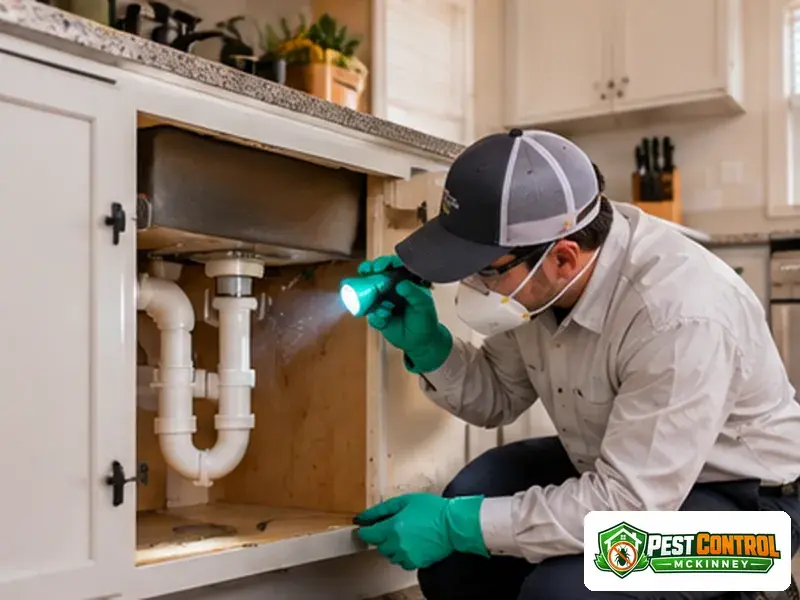
A useful inspection does not simply confirm that a pest exists. A McKinney home pest assessment should document what evidence is present, where activity is concentrated, which access or habitat conditions matter, what cannot be inspected, and which next step is justified by the findings.
That distinction reduces unnecessary treatment. Ant trails, rodent noises, termite-like insects, cockroach sightings, biting insects, and occasional invaders can overlap in appearance or location. Starting with evidence helps keep the service matched to the actual problem.
KEY VARIABLES
What Changes the Service Decision
Interior evidence
Sightings, droppings, trails, damage, odor, nesting material, moisture, food access, and the rooms where activity is repeated.
Exterior access
Foundation edges, doors, utility penetrations, roof transitions, vents, vegetation contact, drainage, storage, and landscape conditions.
Limitations
Locked or inaccessible spaces, concealed construction, insulation, finished walls, height, safety restrictions, and areas outside the agreed scope.
INSPECTION QUALITY
A Useful Inspection Turns Symptoms Into a Service Path
Scratching in an attic, droppings, winged insects, bites, kitchen activity, damaged wood, and exterior sightings can point to very different problems. Inspection should separate fresh evidence from old evidence and record where the activity is actually concentrated.
Interior
Kitchens, bathrooms, bedrooms, garages, utility areas, appliances, plumbing routes, and storage.
Exterior
Foundation, doors, windows, vents, soffits, rooflines, landscaping, irrigation, drainage, and stored materials.
Document
Photos, specimens, fresh versus old signs, inaccessible areas, treatment history, and limitations.
SCOPE BEFORE ASSUMPTIONS
What a McKinney Home Pest Assessment Can Clarify
The inspection should distinguish current signs from old evidence and prioritize findings by relevance. A single dead insect does not carry the same weight as an active trail, fresh droppings, current shelter tubes, repeat sightings, or a documented entry route. Good documentation makes the treatment recommendation easier to understand and creates a baseline for follow-up.
Useful information before the call
Have the property type, ZIP, affected areas, timing, duration, photos if available, recent DIY products or repairs, and any access limitations ready. Better input produces a more useful first conversation.
HOW THE DECISION WORKS
A Practical Four-Step Approach
1
Interview
Review where activity occurs, how often, when it started, and any treatments or repairs already attempted.
2
Inspect
Check accessible interior and exterior areas that logically connect to the reported signs.
3
Interpret
Separate likely pest evidence from unrelated damage, old signs, or conditions that need a different trade.
4
Recommend
Route the finding to the narrowest appropriate service page, treatment plan, monitoring step, or specialist need.
LOCAL CONTEXT
Inspection Priorities Change With the Property
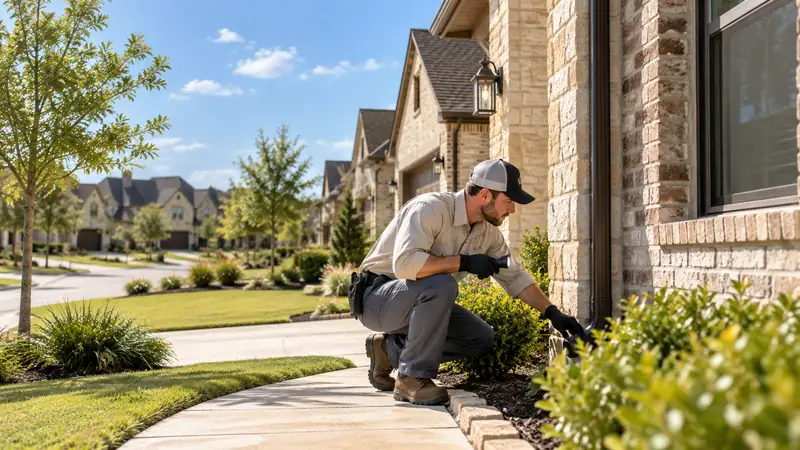
A newer home may put emphasis on fresh utility penetrations, garage transitions, landscaping, grading, and construction interfaces. An established property may have older seals, mature vegetation, prior repairs, stored materials, or recurring moisture. Townhomes can add shared-wall questions. Inspection should reflect those differences without assuming that a neighborhood itself proves a pest problem.
Primary McKinney ZIP references are 75069, 75070, 75071, and 75072. Always confirm the exact address and requested service before relying on a coverage assumption.
IDENTIFICATION, DOCUMENTATION & PROPERTY ASSESSMENT
Different Evidence Routes to Different Specialist Pages
The inspection page owns diagnostic intent. Once the pest or condition is clear, the user should move to the narrowest relevant service page rather than keeping every treatment topic here.
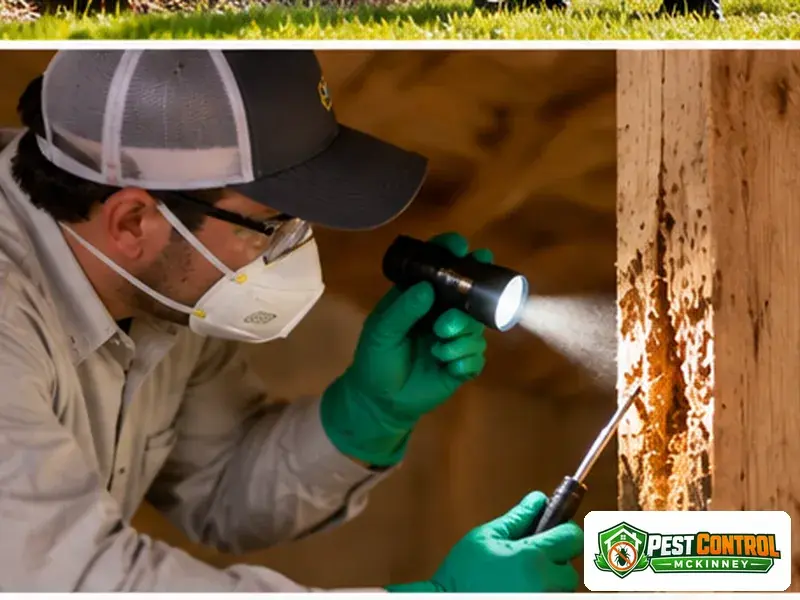
Wood & Termite-Like Evidence
Mud tubes, swarmers, damaged wood, moisture, and foundation conditions should route into the termite pathway when supported by evidence.
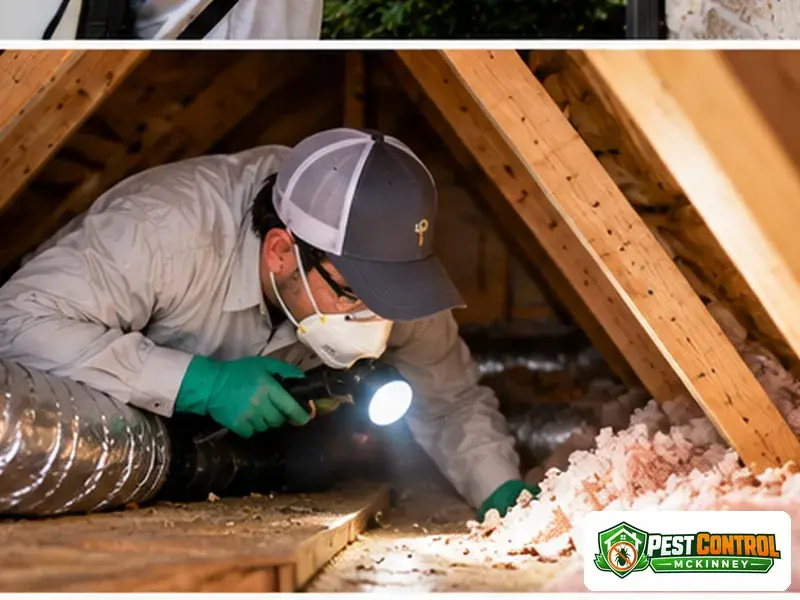
Attic & Rodent Evidence
Droppings, gnawing, rub marks, nesting material, and noise patterns can route into rodent control or exclusion depending on the findings.
Indoor Insect Evidence
Kitchen, bathroom, sleeping-area, or appliance activity can require different cockroach, bed-bug, ant, or other service paths.
Related phrases naturally covered here include home pest inspection, pest assessment, pest identification, attic pest inspection, exterior pest inspection, entry-point inspection, pest monitoring, treatment recommendation, and termite inspection. The goal is to reduce guesswork, not claim that concealed spaces are fully visible.
RELATED PATHS
Related Services & Guides
STRAIGHT ANSWERS
Frequently Asked Questions About Pest Inspections
Can a pest inspection identify every hidden pest problem?
No. Concealed construction and inaccessible areas create limits. The inspection should explain those limits and distinguish observed evidence from assumptions.
Do I need an inspection before every treatment?
Not necessarily. A clearly identified routine issue may need only a focused assessment. Uncertain, recurring, structural, or multi-area concerns benefit more from a formal inspection step.
Is a termite inspection the same as a general pest inspection?
No. Termite and wood-destroying-insect work can have a narrower scope, different evidence, and transaction-specific documentation. Use the termite page for that intent.
Should I clean before the inspection?
Normal access is helpful, but avoid removing all evidence immediately before the visit. Photos of droppings, insects, trails, damage, or nests can be useful if cleanup is necessary.
What should I prepare before calling?
Note where the signs occur, time of day, frequency, duration, recent repairs or treatments, pets or children in the home, and the McKinney ZIP.
Not Sure Which Pest Service You Need?
Start with the evidence. Call with the location, photos if available, timing, recent treatments, and your McKinney ZIP so the next step can be narrowed before service.