
HOME PREVENTION GUIDE
How to Pest-Proof a McKinney Home
Pest-proofing works best as a prioritized inspection of entry, moisture, food, storage, landscaping, and building details-not as a promise to make a home permanently pest-free.
START WITH ACCESS
Seal Relevant Openings Without Damaging the Building
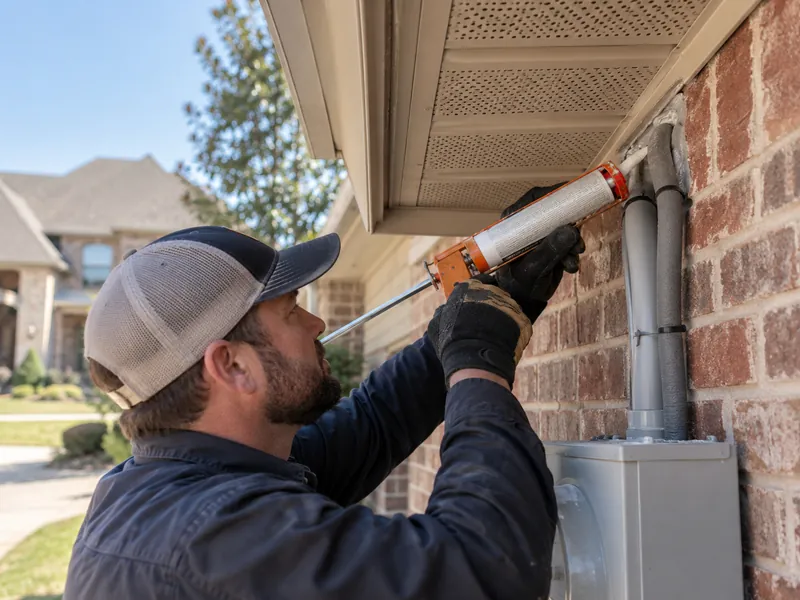
Entry-point work should be based on the pest and the building component. Doors, screens, garages, utility penetrations, rooflines, vents, soffits, foundation transitions, and shared-wall details can all matter, but ventilation and drainage openings should not be blocked blindly.
Doors & Screens
Repair damaged screens, worn sweeps, door gaps, and obvious openings where practical.
Utilities & Garages
Inspect pipe, cable, HVAC, meter, garage-door, side-door, and wall penetrations for pest-supported access.
Roof & Attic
Check soffits, vents, fascia transitions, roof returns, and vegetation contact when evidence points to elevated entry.
Foundation & Exterior
Inspect slab edges, siding transitions, weep areas, cracks, stored items, mulch, and landscaping contact without sealing required drainage.
Rodent-specific structural repair belongs on the Rodent Exclusion page because sequencing matters when animals may still be inside.

PREVENTION PRIORITY
Fix the High-Value Conditions First
Usually Worth Fixing
Damaged screens, worn door sweeps, obvious leaks, unnecessary standing water, exposed food or pet food, unmanaged waste, and clutter that blocks inspection.
Fix When Evidence Supports It
Roofline gaps, soffits, utility penetrations, garage transitions, wall openings, and exterior cracks that match the pest and fresh activity.
Coordinate With Active Control
Rodent entry-point sealing, concealed nest access, active wall-void insects, or conditions where closing an opening too early can trap or redirect pests.
Do Not Block Blindly
Required vents, drainage paths, weep systems, exhausts, and building openings that serve a functional purpose should not be sealed just because a gap is visible.
Pest-proofing works best when prevention follows the diagnosis. A home can have dozens of visible gaps, but only a few may be relevant to the pest that is actually active.
REDUCE SUPPORTING CONDITIONS
Food, Water, Storage, and Landscaping Matter Too
Exclusion is only one prevention tool. Pests can persist when food, moisture, shelter, or breeding conditions remain available. Focus on practical corrections rather than trying to sterilize the property.
Moisture
Repair leaks, manage condensation, maintain drainage, and remove unnecessary standing water.
Food & Waste
Store food, pet food, bird seed, and waste appropriately; clean spills and residues where recurring insects are active.
Storage & Clutter
Organize cardboard, stored materials, garages, attics, and exterior piles so inspection and monitoring remain possible.
Landscape Contact
Trim or manage vegetation touching the structure where appropriate and review mulch, irrigation, tree limbs, and dense resting habitat.
Use the inspection page when you are unsure which prevention step actually matches the evidence.
QUICK ANSWERS
Frequently Asked Questions
Can I seal every crack I see?
No. Some openings provide required ventilation or drainage, and sealing the wrong opening can trap active animals.
What is the most important pest-proofing step?
There is no universal single step. Prioritize the conditions supported by actual pest evidence.
Does pest-proofing replace treatment?
Not when an active infestation already requires control. Prevention and active treatment often work together.
How often should I inspect the exterior?
Recheck after repairs, storms, landscaping changes, construction work, or when fresh pest signs appear.
Still Not Sure Which Service Fits?
Start with the evidence and use the pest-inspection page when identification or source conditions remain unclear.
Prevention reference: EPA guidance on reducing food, water, shelter and entry points. Repairs and exclusion should fit the building and the pest.
Continue with the full collection of McKinney pest-control guides for related identification and prevention topics.