ANT CONTROL FOR MCKINNEY HOMES
Ant Control McKinney, TX
Ant trails, fire-ant mounds, recurring indoor activity, and colonies around foundations need different treatment plans. Start by identifying the ant, locating activity, and checking what is supporting the colony.
ANT CONTROL FOR MCKINNEY HOMES
Start With the Ant, Not Just the Trail
A visible line of ants is useful evidence, but it is not the whole problem. Indoor trails may lead back to wall voids, exterior nesting sites, utility penetrations, moisture sources, or food access. Outdoor mounds can involve a very different treatment strategy. Local ant treatment in McKinney works best when it begins with identification and a property-specific inspection rather than repeated surface spraying.
McKinney includes newer subdivisions, established neighborhoods, irrigated landscapes, patios, slab foundations, garages, and mature planting. Those property differences change where activity should be checked. A useful service plan explains whether the priority is colony treatment, baiting, exterior control, exclusion, sanitation, moisture correction, or a combination.
COMMON SIGNS & PRIORITIES
What to Check Before Choosing a Treatment
Indoor trails
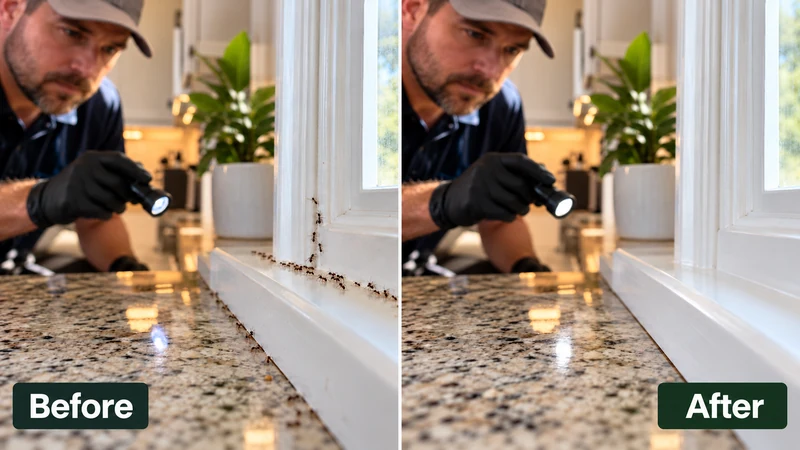
Check kitchens, bathrooms, window lines, plumbing penetrations, baseboards, pet-food areas, and the exterior route feeding the activity.
Fire-ant mounds
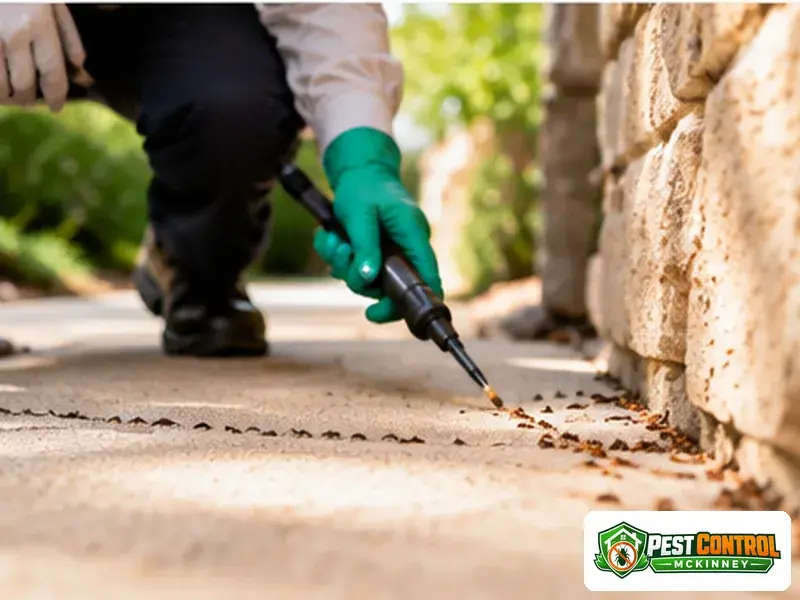
Map visible mounds, yard activity, high-use areas, and whether treatment should focus on individual colonies, broader yard pressure, or both.
Foundation activity
Inspect slab edges, expansion joints, weep areas, landscaping contact, utility lines, and recurring trails entering from outside.
PRE-SERVICE OBSERVATION
Document Ant Activity Before Treatment
A clearer activity pattern makes ant treatment easier to scope. Note where trails begin and end, when activity is strongest, and whether rain, irrigation, food, pet feeding, or cleaning changes what you see.
Track the route
Photograph trails, mounds, window or plumbing routes, and repeat entry points.
Avoid masking evidence
Heavy spraying or strong cleaners can scatter foragers before the source is understood.
Compare follow-up
Watch whether sightings decline, move, or return from the same route after treatment.
INSPECTION FIRST
What a McKinney Ant Inspection Should Check First
The most useful inspection follows the ant from the sighting back toward the source. Repeatedly killing foraging ants without addressing the colony can create short-term improvement while leaving the underlying pressure unchanged. Identification matters because bait preference, nest location, colony behavior, and treatment choice differ among common household ants and fire ants.
Useful information before the visit
Note where activity appears, when it is most noticeable, how long it has been present, any recent DIY products used, moisture or construction changes, and the McKinney ZIP. Clear observations help narrow the inspection without assuming the diagnosis.
HOW THE SERVICE DECISION WORKS
A Practical Four-Step Approach
1
Identify
Confirm the ant type as closely as practical and note where, when, and how often activity appears.
2
Trace
Follow trails, mounds, moisture, food access, vegetation contact, and exterior entry routes.
3
Treat
Match baits, targeted applications, mound treatment, or exterior control to the identified problem and label directions.
4
Prevent
Reduce accessible food, moisture, landscape bridging, and repeat entry where practical; schedule follow-up when the treatment cycle requires it.
LOCAL PROPERTY CONTEXT
Ant Treatment Around McKinney Property Types
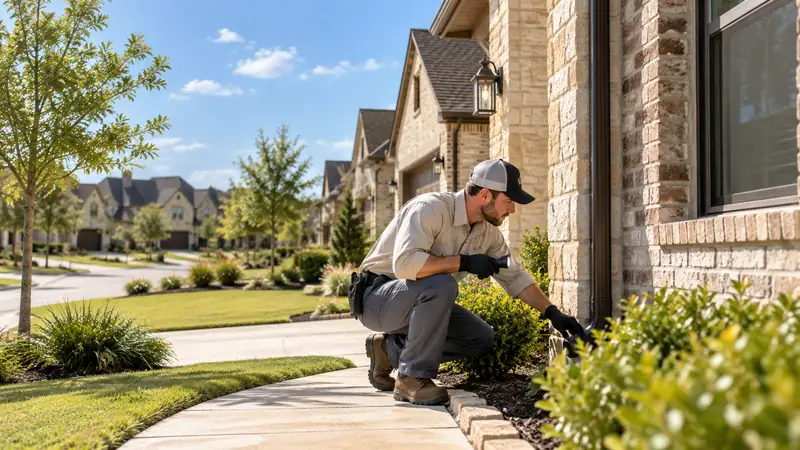
A new home with fresh landscaping may need attention around utility penetrations, grading, irrigation, and slab edges. An established property may have mature vegetation touching the structure, older seals, stored items, or recurring moisture conditions. Townhomes and rentals can add shared-wall or shared-exterior considerations. The inspection should reflect the actual building rather than assume every ant problem begins in the same place.
Primary McKinney ZIPs include 75069, 75070, 75071, and 75072. Service availability and the final scope should still be confirmed for the specific address rather than inferred from a ZIP alone.
ANT SPECIES, COLONIES & ENTRY ROUTES
Different Ant Problems Need Different Decisions
Fire-ant mounds, carpenter-ant activity around damp wood, and small indoor ants following plumbing or window routes should not be treated as one generic problem. Species clues, nest location, moisture, food preference, and trail behavior all influence the plan.
Fire Ants & Exterior Activity
Yard mounds, high-use lawn areas, reinvasion from nearby ground, and sting exposure can shape mound or broadcast-bait decisions.
Carpenter Ants & Moisture
Damp or damaged wood, roof leaks, porches, tree contact, attic areas, and frass-like material deserve closer inspection.
Small Household Ants
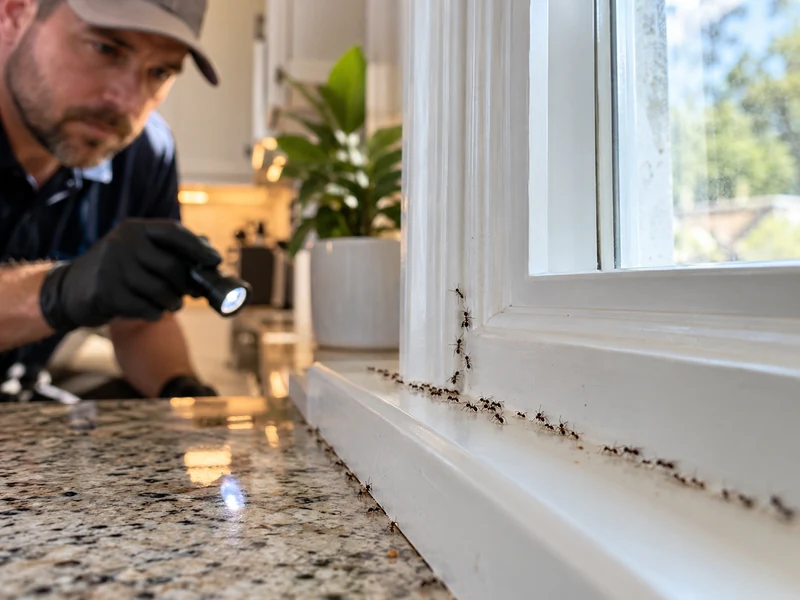
Kitchen, bathroom, baseboard, plumbing, and window trails should be traced because bait preference and nesting behavior can differ by species.
Useful related terms on this page include ant treatment, ant exterminator, fire ant control, carpenter ant control, ant baiting, ant colony treatment, kitchen ants, yard ants, mound treatment, and ant prevention. When winged insects are involved, compare the evidence with termites vs flying ants before choosing a service path.
Related homeowner guides
RELATED PATHS
Related Services & Guides
STRAIGHT ANSWERS
Frequently Asked Questions About Ant Treatment
Why do ants keep coming back after I clean the trail?
Cleaning removes food residue and trail pheromones, but it may not eliminate the colony, exterior pressure, moisture source, or entry route. Recurrence is a reason to trace where the ants are coming from.
Should fire ants and indoor ants be treated the same way?
No. Species, nest location, colony structure, property use, and label directions influence treatment. A yard mound and a kitchen trail should not automatically receive the same method.
Does sealing gaps solve an ant problem by itself?
Exclusion can reduce access, but sealing alone may not resolve an active colony or ants using routes that cannot be practically sealed. Treatment and prevention often work together.
How long does ant treatment take to work?
Timing depends on the ant, product, colony location, treatment method, weather, and whether bait needs to be carried back to the nest. The service plan should explain expected timing without promising an instant result.
Can I request service by ZIP?
Yes. Use the McKinney service-area page to review primary ZIP coverage before scheduling.
Need Help Tracing an Ant Problem?
Call with the rooms or yard areas involved, how long the activity has been present, whether you see mounds or trails, and your McKinney ZIP.