TERMITE INSPECTION & TREATMENT
Termite Control McKinney, TX
Mud tubes, swarmers, damaged wood, moisture concerns, or a real-estate question deserve a termite-specific inspection. Treatment decisions should follow evidence, construction, and the areas that can actually be accessed.
TERMITE INSPECTION & TREATMENT
Termite Work Starts With Evidence
Termites can remain concealed, so a useful inspection does more than look for obvious surface damage. Termite service for McKinney properties may need should consider visible tubes, swarm evidence, wood condition, foundation interfaces, moisture, previous treatment information, inaccessible areas, and the structure’s construction.
The objective is to determine whether signs are consistent with active or historical termite activity and what additional inspection or treatment is justified. No website image can establish activity at a specific property, and cosmetic wood damage alone does not identify the cause.
COMMON SIGNS & PRIORITIES
What to Check Before Choosing a Treatment
Foundation & slab edges
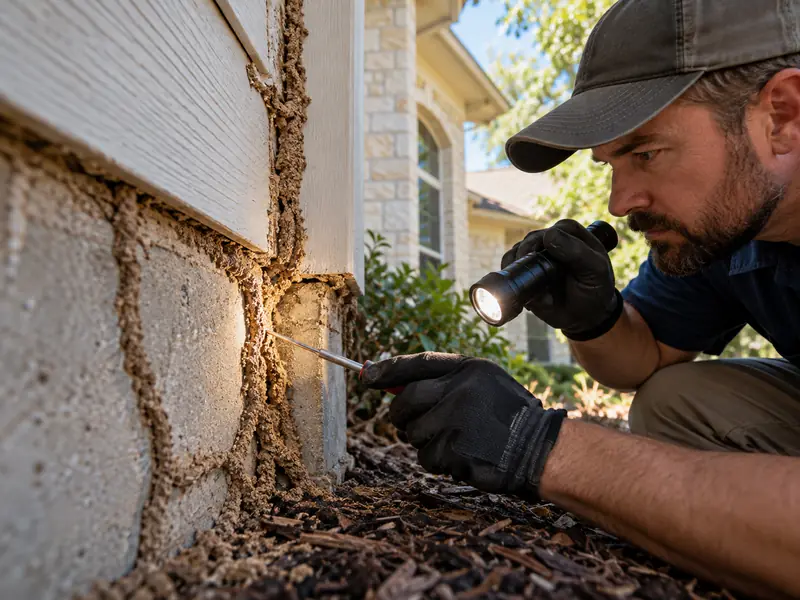
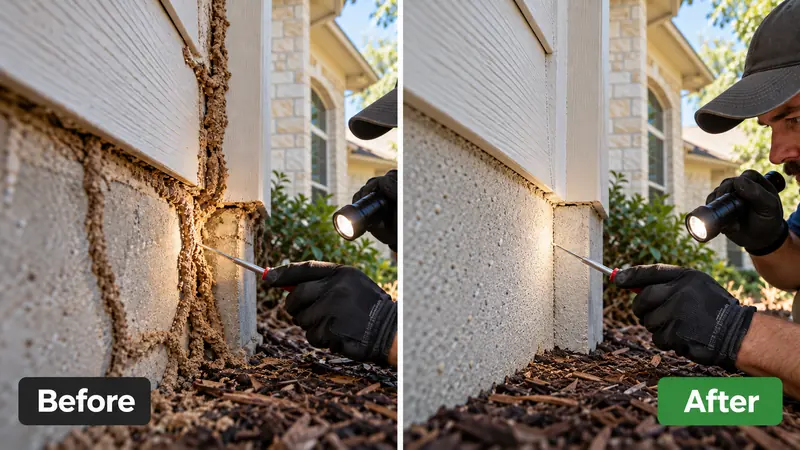
Review accessible foundation interfaces, expansion areas, plumbing penetrations, soil or mulch contact, and visible shelter tubes.
Wood & moisture
Inspect accessible framing, trim, stored wood, damaged material, and conditions that keep wood or adjacent areas damp.
Swarm evidence
Separate winged termites from flying ants by looking at body shape, wings, antennae, where the insects appeared, and supporting property evidence.
TERMITE EVIDENCE & LIMITATIONS
Start With Evidence, Not Damage Alone
Mud tubes, live workers, swarmers, shed wings, damaged wood, soil contact, plumbing penetrations, and moisture can support a termite diagnosis. Old wood damage by itself does not prove current activity.
Foundation
Check accessible slab edges, expansion joints, utility penetrations, and soil contact.
Wood
Look for fresh galleries, damaged trim, moisture, and conditions that keep wood damp.
Swarmers
Save specimens when possible so flying ants and termite swarmers are not confused.
INSPECTION FIRST
What a McKinney Termite Inspection Should Check First
Treatment depends on what the inspection finds. Depending on the situation, options may involve soil-applied treatment, localized treatment, bait-based approaches, correction of conducive conditions, or monitoring. Product selection and application must follow the label and the servicing operator’s applicable Texas requirements. The important point is that a treatment recommendation should connect directly to the evidence and construction, not simply to fear of hidden damage.
Useful information before the visit
Note where activity appears, when it is most noticeable, how long it has been present, any recent DIY products used, moisture or construction changes, and the McKinney ZIP. Clear observations help narrow the inspection without assuming the diagnosis.
HOW THE SERVICE DECISION WORKS
A Practical Four-Step Approach
1
Inspect
Document accessible evidence, construction features, moisture conditions, and areas that cannot be inspected.
2
Differentiate
Determine whether signs are consistent with termites, another wood-destroying organism, ants, old damage, or a non-pest condition.
3
Plan
Match the treatment or monitoring approach to the structure, activity, access, label, and service scope.
4
Follow Up
Explain monitoring, reinspection, conducive-condition correction, and any limitations of the original inspection.
LOCAL PROPERTY CONTEXT
Termite Treatment, New Construction, and Existing Homes
Construction stage changes the available options. Existing homes require inspection around accessible foundations, penetrations, finished areas, and prior modifications. New construction can create different opportunities for prevention before every surface is concealed. For that separate intent, use the new-construction pest-control page rather than forcing construction-stage information into this treatment page.
Primary McKinney ZIPs include 75069, 75070, 75071, and 75072. Service availability and the final scope should still be confirmed for the specific address rather than inferred from a ZIP alone.
SUBTERRANEAN TERMITES, SWARMERS & WOOD EVIDENCE
The Treatment Plan Follows the Structure and the Evidence
Termite control in McKinney can involve inspection, liquid soil treatment, bait-based systems, localized treatment, monitoring, or correction of conducive conditions. The right method depends on the findings and building access.
Foundation & Soil Interface
Mud tubes, slab edges, plumbing penetrations, grade, moisture, and concealed entry points can shape the inspection and treatment plan.
Wood & Structural Evidence
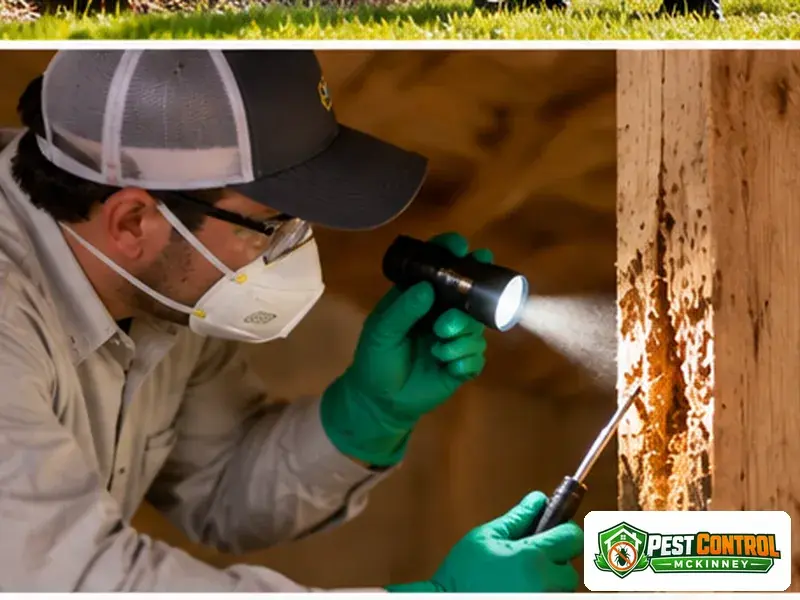
Damaged wood, moisture, frass-like material, trim, porches, and accessible framing should be evaluated before assuming active termites.
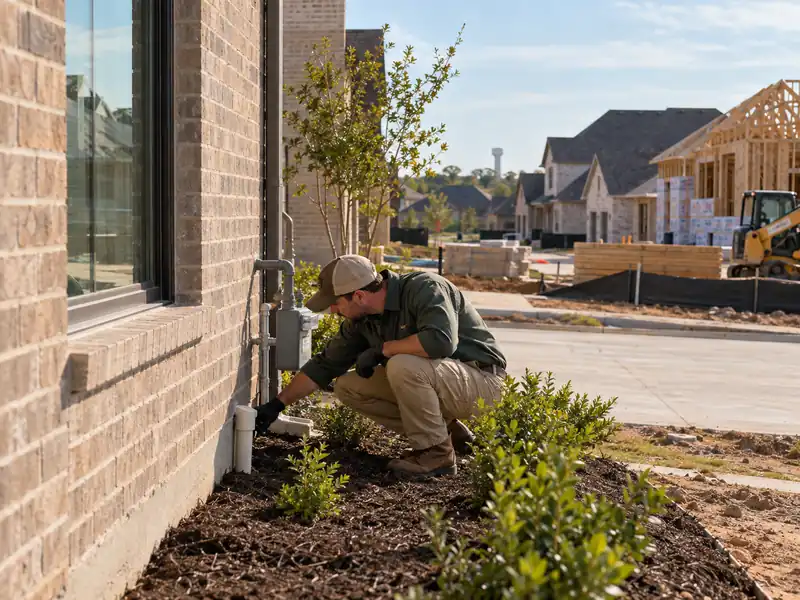
Construction & Prevention
Preconstruction or turnover planning has different timing and access. Keep that intent on the dedicated new-construction pest-control page.
Related terms naturally covered here include termite treatment, termite inspection, termite exterminator, subterranean termites, termite swarmers, mud tubes, termite damage, bait stations, liquid termiticide, soil treatment, and monitoring. For winged insects, use the Termite vs Flying Ant guide.
A termite inspection in McKinney may lead to termite treatment when active evidence supports it. A termite exterminator should distinguish live activity from previous damage and explain whether liquid treatment, termite bait stations, monitoring, or another method fits the structure.
RELATED PATHS
Related Services & Guides
STRAIGHT ANSWERS
Frequently Asked Questions About Termite Service
Are flying ants and termite swarmers the same thing?
No. They can look similar at a glance, but antennae, waist shape, wing proportions, location, and supporting evidence differ. Save a specimen or clear photo when possible.
Does visible wood damage prove active termites?
No. Damage can be historical or caused by another issue. Activity should be evaluated using current evidence and the surrounding conditions.
What is a wood-destroying insect inspection?
It is a specific inspection scope focused on evidence of wood-destroying organisms and relevant conditions. Real-estate transactions may require specific forms or credentialed inspection procedures.
Can moisture increase termite concern?
Persistent moisture and wood-to-soil or cellulose contact can be conducive conditions. Correcting them can support prevention, although it does not replace treatment when active termites are confirmed.
Should a new home have termite planning?
Construction-stage planning can be useful because some areas are easier to address before completion. See the new-construction page for that distinct service intent.
Found Mud Tubes, Swarmers, or Suspicious Wood?
Call with the location of the sign, when you first noticed it, any recent swarm activity, and whether the property is existing construction or a new build.