
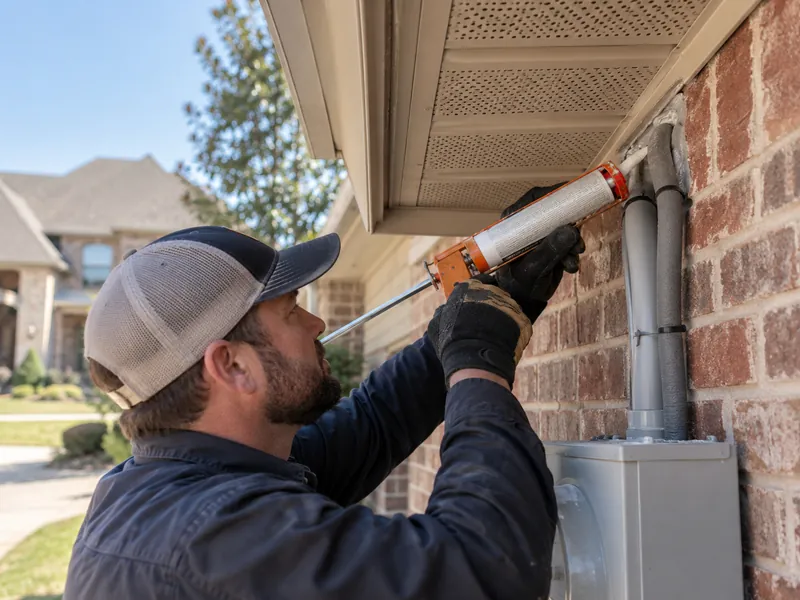
ENTRY-POINT REPAIR AFTER RODENT ACTIVITY
Rodent Exclusion McKinney, TX
Exclusion is the structural side of rodent control: identify the routes supported by evidence, close practical openings with suitable materials, and then monitor whether fresh signs return.
ENTRY-POINT REPAIR AFTER RODENT ACTIVITY
Exclusion Should Follow the Evidence
Sealing every visible crack is not the same as rodent-proofing a home. McKinney rodent-proofing work should be based on fresh signs, likely travel routes, construction details, and the sequence of the active control plan. If animals are still inside, closing the wrong opening at the wrong time can create a new problem rather than solve the existing one.
The inspection should connect droppings, gnawing, rub marks, noises, nesting material, camera observations, or device activity with roof, garage, utility, vent, door, and foundation transitions. That produces a repair list ranked by likelihood and importance instead of a random list of gaps.
INSPECTION PRIORITIES
What to Check Before Treatment
Roofline & vents
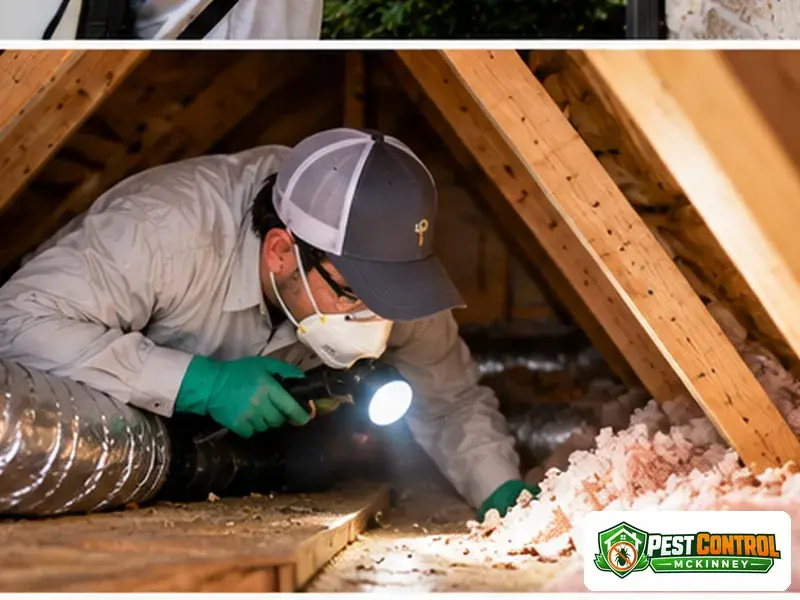
Review soffits, roof returns, vents, fascia transitions, attic openings, and vegetation that can provide elevated access.
Garage & doors
Check lower corners, worn seals, thresholds, side-door gaps, and transitions between the garage and finished structure.
Utilities & penetrations
Inspect pipe, cable, HVAC, meter, foundation, and wall penetrations for openings supported by rodent evidence.
WHY DETAILS MATTER
Materials Matter as Much as the Gap
A repair should fit the building component and the type of opening. Some locations need metal screening, flashing, hardware cloth, suitable sealant, a door sweep, vent protection, or a combination. Foam alone is not a universal rodent-proofing material, and a repair that blocks required drainage or ventilation can create building problems. The servicing company should explain what is being closed and why that material is appropriate.
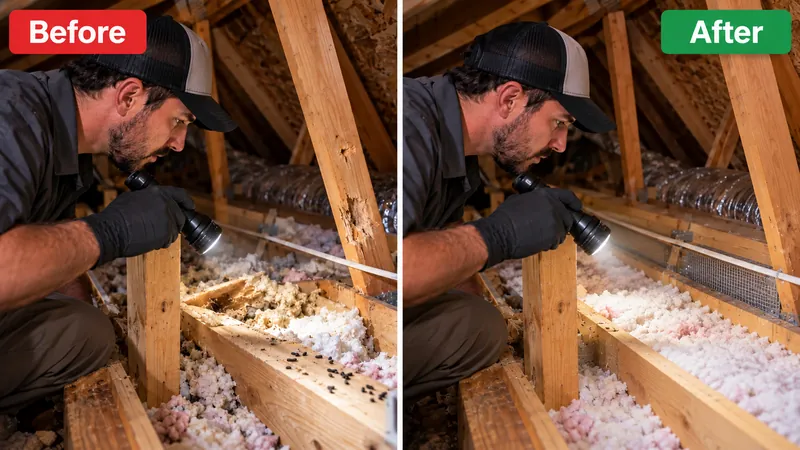
Photographing likely entry points before work creates a useful baseline. After repairs, compare the same locations during follow-up and watch for new gnawing, disturbed material, fresh droppings, or activity at a different route. Exclusion works best as part of a monitored plan rather than a one-time cosmetic patch.
SERVICE WORKFLOW
A Practical Four-Step Approach
1
Confirm Activity
Make sure the rodent problem and the areas of current activity are understood.
2
Map Routes
Connect fresh evidence to likely structural access points and travel paths.
3
Repair Priority Openings
Use suitable materials without blocking building functions or trapping active animals.
4
Recheck
Monitor repaired areas and remaining signs to confirm whether additional routes need attention.
MCKINNEY PROPERTY CONTEXT
Property Conditions Still Change the Plan
Homes across McKinney differ in age, construction, landscaping, irrigation, storage, rooflines, garages, shared walls, and access. Primary ZIP references are 75069, 75070, 75071, and 75072, but the actual property conditions-not the ZIP alone-determine the inspection and treatment scope.
ROOFLINES, VENTS, GARAGES & STRUCTURAL GAPS
Exclusion Is Building Work Guided by Rodent Evidence
Rodent exclusion should follow evidence, not a random list of gaps. The goal is to prioritize openings that match fresh activity while preserving ventilation, drainage, doors, and normal building function.
Entry-Point Sealing
Utility penetrations, door transitions, lower gaps, and other confirmed routes need materials suited to the opening and building surface.
Roofline & Attic Access
Soffits, vents, roof returns, fascia transitions, and elevated utility routes matter when fresh evidence is concentrated overhead.
Repair Follow-Up
After structural work, monitor for fresh gnawing, droppings, noises, or reopened gaps so repairs can be checked against the original evidence.
Active rodent removal and structural sealing serve different purposes. Coordinate the timing of trapping or other control methods with exclusion repairs so animals are not sealed inside.
trapping, baiting, species identification, and active-population reduction belong on Rodent Control; sealing and structural repair belong here.
Rodent exclusion can include sealing entry points, screening vents, and correcting gaps around garages, attics, and utility routes. Coordinate these repairs with active rodent removal when an infestation is present.

RELATED PATHS
Related Services & Guides
STRAIGHT ANSWERS
Frequently Asked Questions
Should exclusion be done before trapping?
Not automatically. The sequence depends on whether animals are inside, which routes are active, and how the control plan is being managed.
Can expanding foam keep mice out?
Foam can be part of some repairs, but it is not a universal rodent-resistant material. The opening and building component should determine the repair.
Do roof rats require different inspection priorities?
They can. Elevated access, vegetation, rooflines, attic transitions, and overhead routes may deserve more attention than ground-level gaps alone.
How do I know whether an old hole is active?
Look for current evidence such as fresh droppings, rub marks, gnawing, disturbed material, tracks, or monitoring results rather than assuming every opening is in use.
Does exclusion prevent every future rodent?
No repair can guarantee that a property will never experience rodents. Good exclusion reduces practical access and makes future inspection and monitoring more effective.
Need Entry Points Prioritized?
Call with the location of current rodent signs, any attic or garage activity, and whether removal work is already underway.