
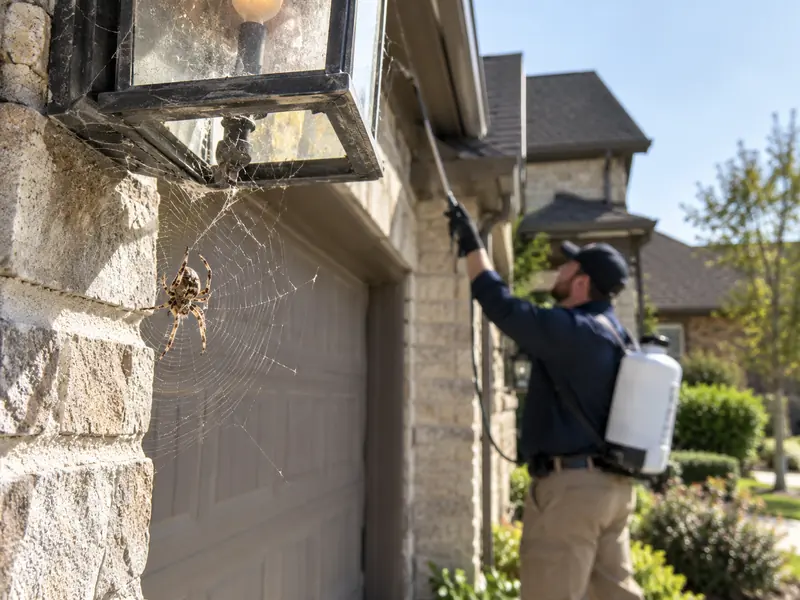
WEBS, PREY & ENTRY CONDITIONS
Spider Control McKinney, TX
Recurring spiders often reflect prey availability, exterior lighting, protected web sites, gaps, vegetation, or other conditions that keep the same areas attractive.
WEBS, PREY & ENTRY CONDITIONS
Treat the Conditions Supporting Spider Activity
A single spider indoors is different from repeated webs around doors, eaves, lights, patios, garages, or interior corners. Local spider treatment works best when it starts by identifying where spiders are concentrating and what prey or shelter is supporting them. Removing webs can improve the appearance, but recurring activity usually deserves a broader exterior and entry-point review.
Inspection priorities include porch and security lights, window frames, soffits, siding transitions, garages, stored materials, fence lines, vegetation touching the structure, and insect activity around the home. Indoors, repeated sightings should be mapped by room rather than treated as isolated surprises.
INSPECTION PRIORITIES
What to Check Before Treatment
Web sites
Eaves, lights, windows, porch corners, garages, fence lines, and protected exterior voids can provide stable web locations.
Prey pressure
Flying insects and other small pests around lighting, moisture, vegetation, or entries can keep spiders returning.
Entry conditions
Screens, door sweeps, utility gaps, storage, and vegetation contact can influence how often spiders appear indoors.
WHY DETAILS MATTER
Web Removal Is Useful, but It Is Not the Whole Plan
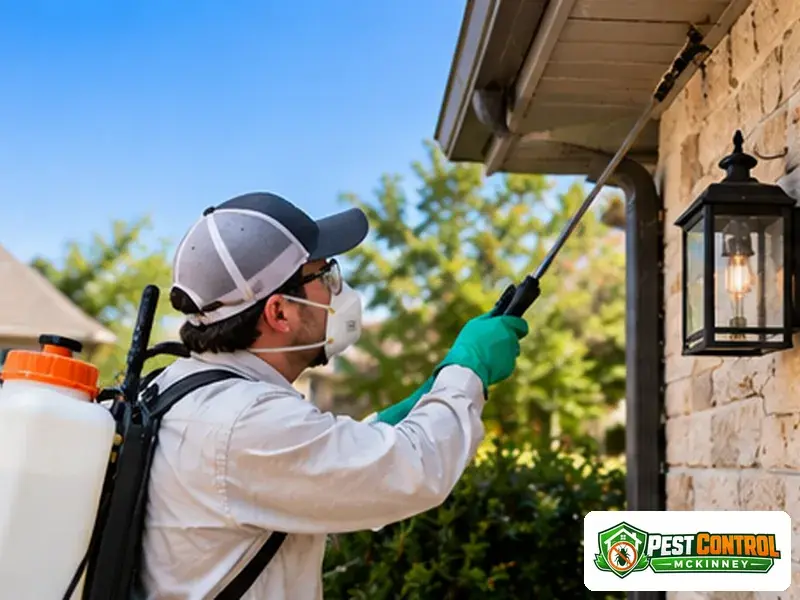
Physical web removal helps reduce egg sacs, old webs, and visible buildup. It also makes follow-up easier because new web construction becomes more obvious. Treatment can then focus on appropriate exterior harborage or entry areas according to the product label rather than spraying every surface indiscriminately.
Prevention is mostly about reducing the conditions that support repeated activity. Adjust exterior lighting where practical, improve screens and door seals, reduce clutter in garages, trim vegetation away from the structure where appropriate, and address moisture or insect pressure that creates prey. These steps do not create a spider-proof home, but they make the property less favorable and make future activity easier to identify.
SERVICE WORKFLOW
A Practical Four-Step Approach
1
Map Activity
Note recurring webs, indoor sightings, egg sacs, and areas with heavy insect activity.
2
Remove Webs
Clear accessible old webs and egg sacs so new activity is easier to monitor.
3
Treat Target Areas
Focus labeled treatment on relevant exterior, harborage, and entry zones.
4
Reduce Recurrence
Improve lighting, screens, seals, storage, vegetation contact, and prey conditions where practical.
MCKINNEY PROPERTY CONTEXT
Property Conditions Still Change the Plan
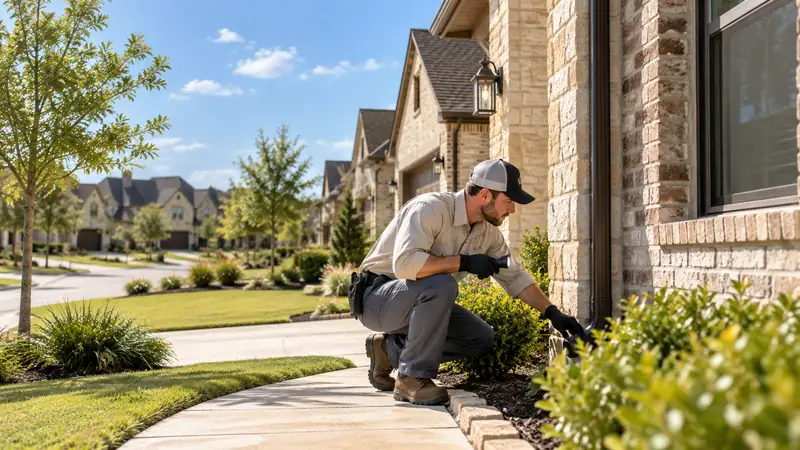
Homes across McKinney differ in age, construction, landscaping, irrigation, storage, rooflines, garages, shared walls, and access. Primary ZIP references are 75069, 75070, 75071, and 75072, but the actual property conditions-not the ZIP alone-determine the inspection and treatment scope.
SPECIES, WEBS, PREY & EXTERIOR HABITAT
Spider Control Works Better When the Prey Base Is Addressed
Repeated webs or indoor sightings often reflect a combination of prey insects, exterior lighting, shelter, and entry conditions. Most spiders are harmless, while black widows and brown recluses deserve careful identification rather than guesswork.
Web Sites & Exterior Lights
Eaves, windows, porch lights, garages, sheds, fence corners, and protected exterior surfaces can support repeated web-building activity.
Prey & Perimeter Pressure
Exterior insect activity can keep spiders returning even after webs are removed. Entry pressure and prey reduction often matter together.
Identification & Indoor Sightings
Wolf spiders, cellar spiders, jumping spiders, orb weavers, widows, and recluse concerns should not be treated as one category.
Related terms naturally covered here include spider treatment, spider removal, black widow control, brown recluse control, wolf spiders, spider web removal, exterior spider treatment, garage spiders, spiders around lights, and spider prevention. Physical web removal helps monitoring, but long-term control also depends on prey, shelter, and entry conditions.
Related homeowner guides
RELATED PATHS
Related Services & Guides
STRAIGHT ANSWERS
Frequently Asked Questions
Does seeing one spider mean I need treatment?
Not necessarily. One occasional spider may simply have wandered indoors. Repeated sightings, heavy webbing, egg sacs, or concentrated exterior activity justify closer inspection.
Why do spiders gather near exterior lights?
Lights can attract flying insects, creating a reliable food source around doors, windows, eaves, and fixtures.
Should every spider web be sprayed?
No. Web removal, inspection, prey reduction, exclusion, and targeted labeled treatment are usually more useful than indiscriminate spraying.
Can landscaping affect spider activity?
Dense vegetation, stored materials, fence lines, and plants touching the structure can create protected habitat and pathways.
Will treatment eliminate all spiders permanently?
No. Outdoor spiders and prey can move back into favorable areas. The goal is to reduce pressure and recurring access, then monitor the areas that matter most.
Seeing Webs Return in the Same Places?
Call with the areas involved, whether sightings are mainly inside or outside, and your McKinney ZIP.