
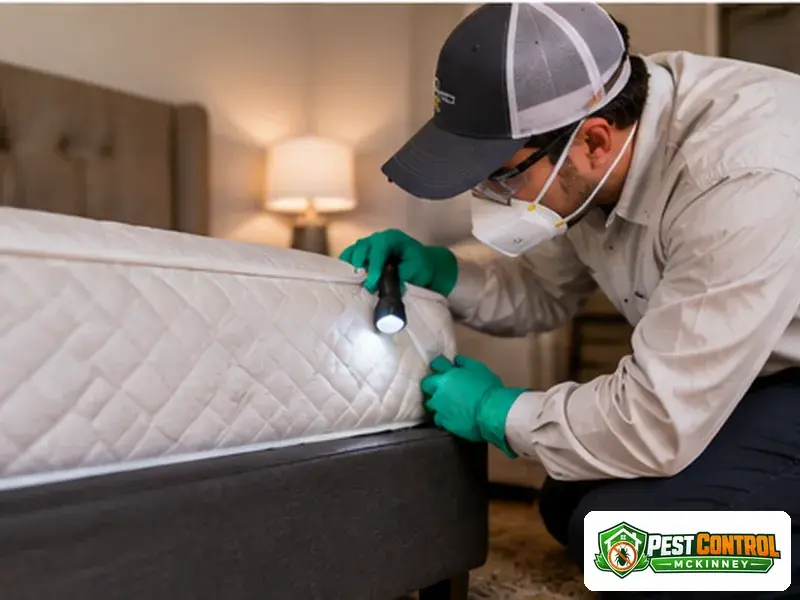
INSPECTION BEFORE ASSUMPTIONS
Bed Bug Control McKinney, TX
Suspected bites alone do not confirm bed bugs. Inspection should look for insects, cast skins, spotting, eggs, and patterns around sleeping and resting areas before a treatment plan is chosen.
INSPECTION BEFORE ASSUMPTIONS
Confirm the Pest Before Preparing the Whole Home
Bed bugs can hide in narrow seams, joints, cracks, furniture, and belongings close to where people rest. The service decision should begin with evidence rather than bite appearance alone. Other insects, skin conditions, and environmental causes can produce marks that look similar. A careful inspection helps avoid unnecessary preparation or treatment.
The highest-priority areas are usually mattress and box-spring seams, bed frames, headboards, nearby furniture, upholstered resting areas, baseboards, and items close to the reported activity. Travel history, used furniture, recent guests, neighboring units, and previous treatment attempts can also change the inspection.
INSPECTION PRIORITIES
What to Check Before Treatment
Mattress & bed frame
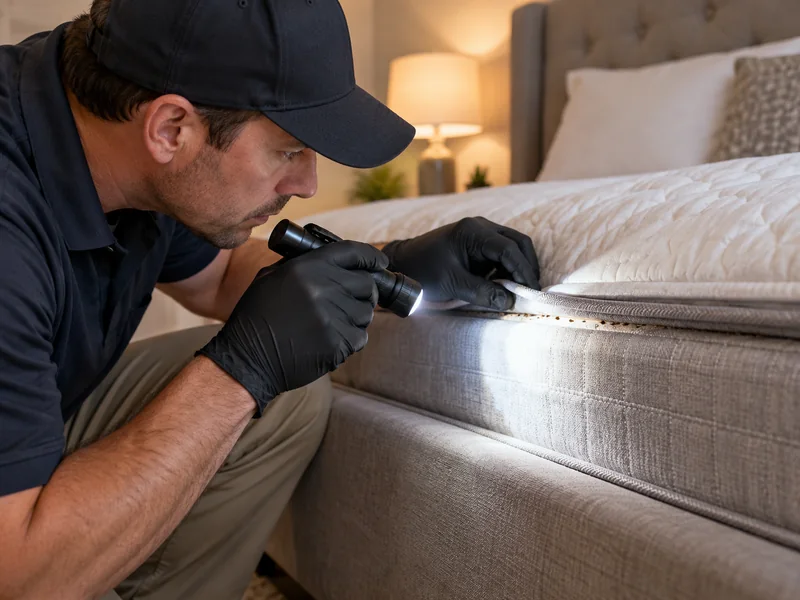
Inspect seams, tufts, labels, screw holes, joints, headboards, and the areas immediately around the bed.
Nearby furniture
Nightstands, upholstered furniture, baseboards, and items near resting areas can provide additional hiding sites.
Evidence, not bites alone
Live bugs, cast skins, spotting, eggs, and confirmed specimens carry more diagnostic weight than skin reactions by themselves.
WHY DETAILS MATTER
Preparation Should Match the Treatment Method
Different bed-bug treatment methods can require different preparation. Do not discard mattresses, empty every closet, move belongings between rooms, or apply multiple over-the-counter products before the servicing company explains the plan. Moving infested items can spread activity, while excessive clutter changes access and may complicate inspection.
Follow-up is especially important because hidden bugs, eggs, inaccessible harborages, and neighboring or reintroduced activity can affect results. Local bed bug treatment should include clear instructions for preparation, re-entry, monitoring, and what signs to report after the initial service. Keep specimens or photographs when possible so follow-up decisions are based on evidence.
SERVICE WORKFLOW
A Practical Four-Step Approach
1
Confirm
Inspect likely harborages and obtain a specimen or clear evidence when possible.
2
Define Scope
Determine which rooms, furniture, adjoining areas, and belongings need attention.
3
Prepare Correctly
Follow only the preparation instructions that match the selected treatment method.
4
Monitor & Recheck
Use follow-up inspections and agreed monitoring to evaluate whether activity is declining.
MCKINNEY PROPERTY CONTEXT
Property Conditions Still Change the Plan
Homes across McKinney differ in age, construction, landscaping, irrigation, storage, rooflines, garages, shared walls, and access. Primary ZIP references are 75069, 75070, 75071, and 75072, but the actual property conditions-not the ZIP alone-determine the inspection and treatment scope.
SIGNS, HARBORAGE, PREPARATION & FOLLOW-UP
Confirm Bed Bugs Before Preparing the Whole Home
Bites alone do not confirm bed bugs. Live insects, cast skins, dark spotting, eggs, and characteristic evidence around sleeping or resting areas carry more weight and help define how far inspection should extend.
Beds & Nearby Furniture
Mattress seams, labels, box springs, bed frames, headboards, nightstands, upholstered furniture, and nearby floor-wall edges deserve close inspection.
Inspection & Confirmation
Evidence should be documented before treatment so preparation is matched to the actual rooms and harborages rather than the whole property by default.
Treatment Preparation & Follow-Up
Preparation, treatment method, adjacent areas, monitoring, encasements, and follow-up timing can influence whether the problem is actually resolved.
Avoid spreading the problem:
move items carefully, follow provider instructions, and do not relocate suspected infested furniture or belongings into clean rooms without a plan.
Related phrases naturally covered here include bed bug exterminator, bed bug treatment, bed bug inspection, mattress inspection, bed bug bites, bed bug eggs, encasements, interceptors, preparation, heat treatment, chemical treatment, adjacent rooms, and post-treatment monitoring. Review Pest Control Safety alongside the treatment method actually offered.
A bed bug exterminator in McKinney should first confirm the evidence and treatment scope. Bed bug inspection and bed bug treatment may involve mattress and furniture inspection, encasements, interceptor monitors, preparation instructions, adjacent-room checks, and follow-up.
RELATED PATHS
Related Services & Guides
STRAIGHT ANSWERS
Frequently Asked Questions
Do bites prove that I have bed bugs?
No. Bite reactions are not specific enough to confirm bed bugs. Look for live insects or other characteristic evidence and inspect the sleeping area.
Should I throw away my mattress?
Not automatically. Disposal can be unnecessary and may spread bugs if the item is moved through the home without a plan.
Can I sleep in another room after finding bed bugs?
Changing sleeping locations can alter where bugs search for a host and may complicate the infestation pattern. Follow the servicing company’s preparation guidance.
Why is follow-up often needed?
Bed bugs can hide deeply, eggs may survive some treatment stages, and activity can be missed in inaccessible areas. Monitoring helps determine whether the population is declining.
What should I save for the inspection?
If possible, capture a suspected insect securely or take a clear close-up photo. Also note where and when signs were found and any products already used.
Found a Suspected Bed Bug Sign?
Call with the room involved, the evidence you found, recent travel or furniture changes, and whether any products have already been applied.