
IDENTIFICATION GUIDE
Termite vs Flying Ant in McKinney
Winged ants and termite swarmers can look similar at a glance. Use body shape, antennae, wings, location, and supporting property evidence before assuming the service you need.
HOW TO COMPARE THEM
Start With the Insect, Then Check the Property
A single blurry photo is not enough to diagnose a swarmer. The best comparison uses several features together and then asks where the insects appeared, whether mud tubes or damaged wood are present, and whether similar ants are active nearby.
Antennae
Flying ants generally have distinctly elbowed antennae. Termite swarmers have straighter, bead-like antennae.
Waist
Ants usually show a pinched or narrow waist between thorax and abdomen. Termites have a broader, more uniform body profile.
Wings
Termite swarmers typically have two pairs of wings that are similar in size and extend beyond the body. Ant forewings are generally larger than the hindwings.
Supporting Evidence
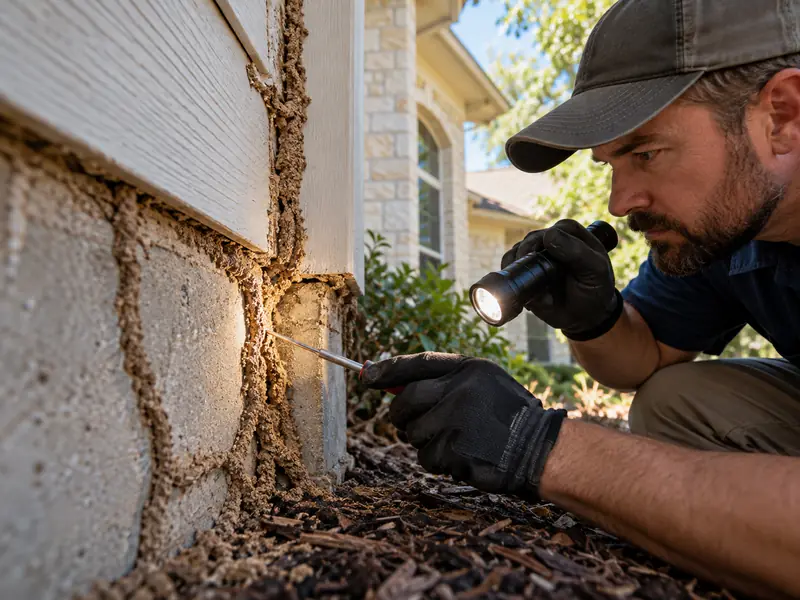
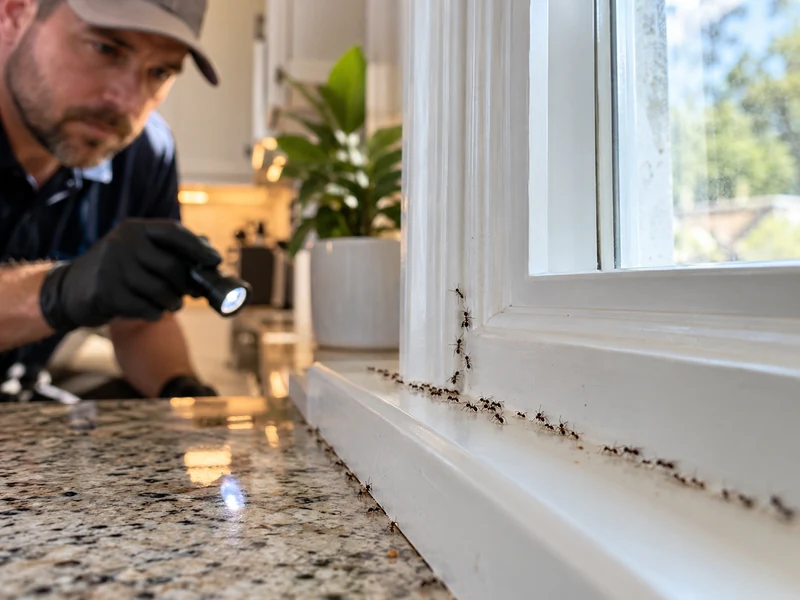
Mud tubes, live termite workers, discarded wings, damaged wood, ant trails, outdoor mounds, and nest behavior help interpret the insect itself.
If you can safely capture a specimen, preserve it in a small container or clear bag. That is more useful than destroying every insect before an inspection.
LOCATION & PROPERTY CONTEXT
Where the Swarm Appears Changes What It Means
Inside the Structure
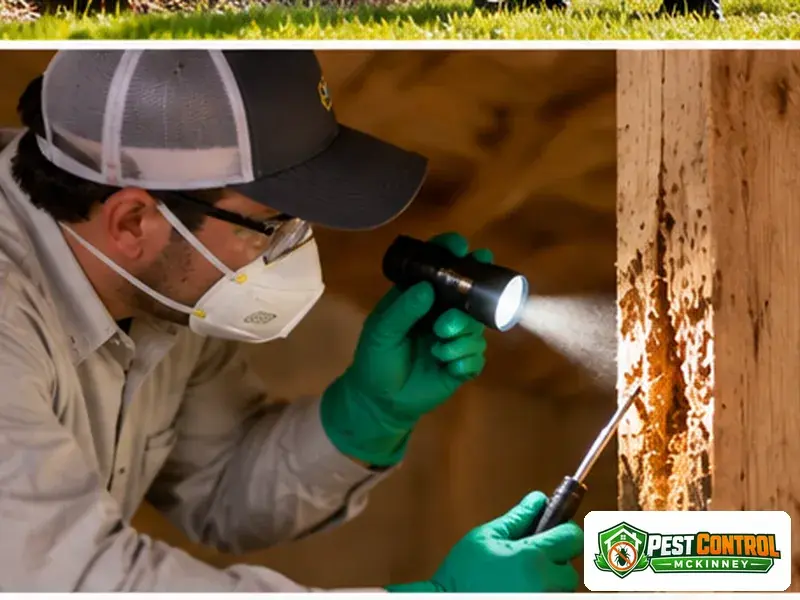
Repeated indoor swarmers, shed wings, mud tubes, or wood evidence deserve a closer termite inspection than a single insect found outdoors.
Outside Near Lights
Winged insects around porch lights or windows may be dispersing from outside. Capture a specimen before deciding whether the issue is termites or ants.
Moisture & Wood Conditions
Foundation contact, damp wood, leaks, porches, mulch, landscaping, and construction details can strengthen or weaken the termite hypothesis.
Do Not Diagnose by Color Alone
Body shape, antennae, wing proportions, specimen quality, and supporting property evidence are more useful than “brown” or “black” insect descriptions.
NEXT STEP
Do Not Treat Swarmers as a Standalone Diagnosis
Swarming shows that reproductive insects are dispersing, but the swarm location and the rest of the property evidence determine what it means. Indoor swarmers emerging from a structure deserve a different level of attention from winged insects collected outdoors near lights.
If It Looks Like an Ant
Use the ant control page for trails, nests, fire ants, carpenter ants, or recurring indoor colonies.
If It Looks Like a Termite
Use the termite page for mud tubes, swarmers, wood evidence, inspection, and treatment planning.
If You Are Unsure
Start with a pest inspection rather than selecting treatment from a photo alone.
The goal is identification first. Treating the wrong insect wastes time and can hide the evidence needed for the correct diagnosis.
QUICK ANSWERS
Frequently Asked Questions
Are termite swarmers always found near damaged wood?
No. Swarmers may collect near windows, doors, lights, or other exit points. Supporting evidence is still needed.
Do flying ants damage wood?
Some ants, especially carpenter ants, can excavate galleries in damp or damaged wood, but they do not consume cellulose the way termites do.
Can I identify them by wing length alone?
Wing proportions are useful, but use several characteristics together rather than one feature.
Should I spray the swarm before inspection?
If practical, save a specimen or clear photo first. Heavy spraying can remove evidence without addressing the source.
Still Not Sure Which Service Fits?
Start with the evidence and use the pest-inspection page when identification or source conditions remain unclear.
Identification reference: University of Minnesota Extension’s subterranean termite identification guide. Regional seasonality varies; use the physical features for comparison.
Continue with the full collection of McKinney pest-control guides for related identification and prevention topics.